Author: seo

  • Etihad Expands Global Footprint With 300+ Daily Flights And 9 New, Returning Routes

    Etihad Expands Global Footprint With 300+ Daily Flights And 9 New, Returning Routes

    For the discerning global traveler who demands absolute efficiency, seamless premium connectivity, and world-class lounge experiences, the regional aviation landscape has just taken a monumental leap forward. Etihad Airways has formally inaugurated its most extensive summer schedule to date, shattering past operational records by deploying more than 300 flights per day.

    Backed by an aggressive multi-billion-dollar fleet modernization strategy, this summer expansion introduces nine highly curated new and returning routes designed to connect elite passengers directly to the world’s most exclusive cultural, business, and leisure hotspots.

    Etihad is launching its biggest summer season ever, scaling up to 300+ daily flights and a 10% year-on-year capacity jump. This aggressive growth is powered by 23 additional aircraft, all while maintaining a stellar ~90% global load factor.

    Etihad Airways 


    Fleet Optimization Drives Elite Connectivity

    Operating a flight schedule of this magnitude requires flawless logistical execution. To support a 10% year-on-year capacity increase during peak global travel windows, Etihad has strategically expanded its operational fleet by 23 aircraft compared to last summer.

    This rapid asset deployment ensures that premium cabin availability — including Business and First-Class suites — remains highly accessible even during the competitive summer rush.

    Network data reveals that despite the massive surge in seat availability, the airline is operating at a near-90% load factor. This underscores an exceptionally high demand for premium travel to and from the UAE, driven heavily by affluent international corporate leaders, investors, and elite vacationers who view the country as their primary global anchor hub.

    Curating the Global Route Map

    The architectural design of Etihad’s expanded summer network focuses on high-value destinations that align perfectly with the interests of a premium clientele. Between June 11 and June 14, the airline rolled out four consecutive daily route launches:

    1. Kraków: Accessing Poland’s premier cultural capital and burgeoning tech ecosystem.

    2. Palma de Mallorca: A direct link to the heart of Spain’s ultra-luxury Mediterranean villa culture.

    3. Damascus: Restoring a critical regional link to facilitate premium corporate and family transit.

    4. Zanzibar: Providing an direct gateway to exclusive, private island resorts off the coast of East Africa.

    Complementing these year-round additions is the grand seasonal return of five iconic summer escapes, allowing VIP travelers to easily transition from the Arabian Gulf to Europe’s most desirable coastlines:

    • Mykonos & Malaga: Serving the European summer elite with increased weekly frequencies.

    • Santorini & Nice: Offering immediate access to the ultra-luxury markets of the Cyclades and the French Riviera.

    • Al Alamein: Connecting directly to Egypt’s rapidly expanding luxury Mediterranean riviera.


    Redefining the Premium Layover Experience

    To further elevate the travel experience, Etihad’s expanded schedule is accompanied by the introduction of complimentary 15-day medical travel insurance for incoming international guests, working in tandem with the Daman insurance network.

    For high-net-worth individuals utilizing the UAE Stopover Programme, this feature provides total peace of mind, transforming an international transit into an opportunity to conduct asset reviews, view high-end real estate portfolio listings, or enjoy bespoke hospitality experiences across the emirates.

    For the elite traveler, an international layover is the ideal window to anchor permanent global legacy and wealth. We eliminate all administrative friction by offering an uncompromising, white-glove approach to cross-border expansion; establish your sovereign operational rights via our premium trade license services and enjoy flawless execution across corporate banking and private asset management.
  • Cautions and Consistency: Inside Dubai’s Transitioning Property Market for Q1 2026

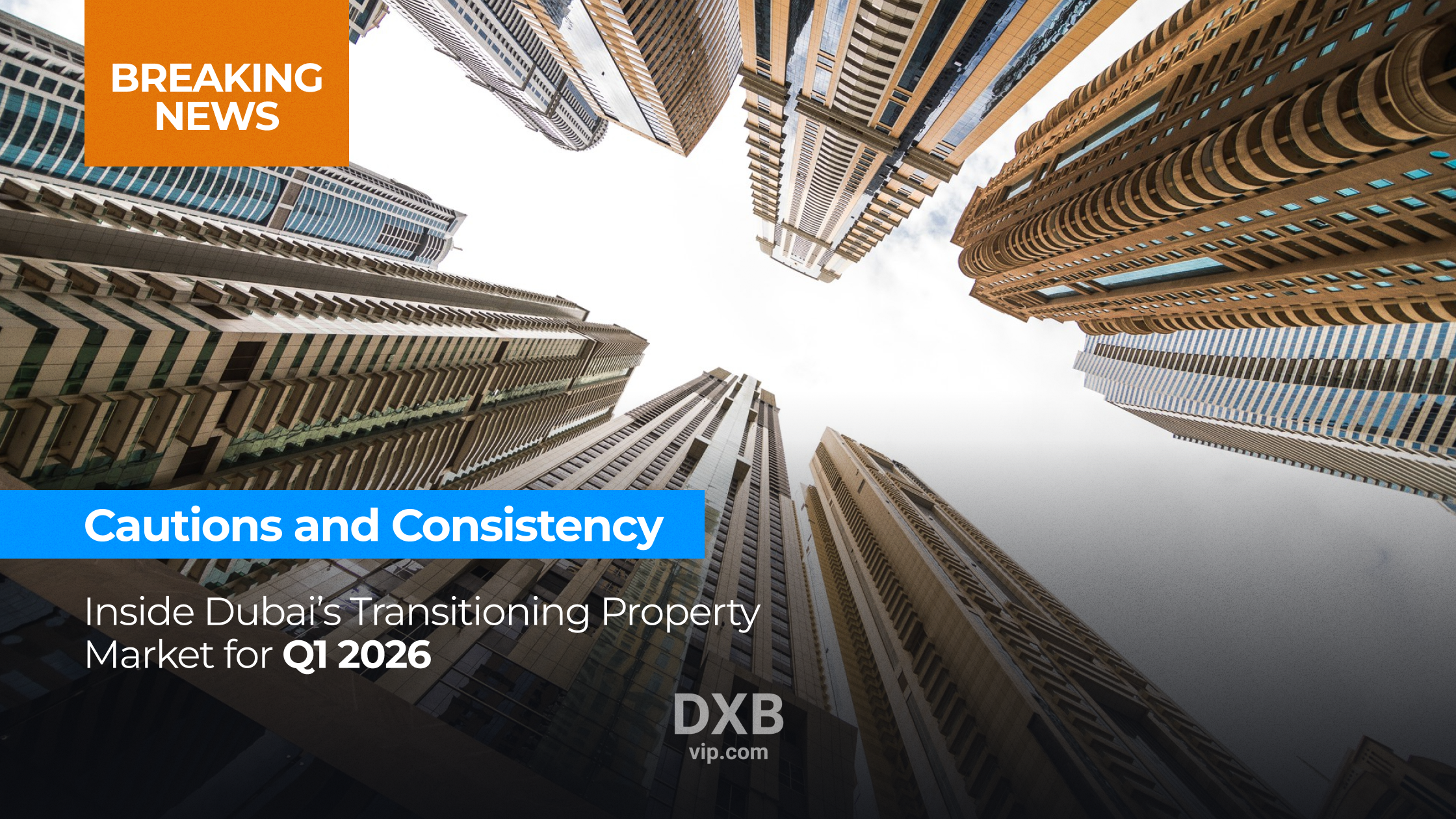
    Cautions and Consistency: Inside Dubai’s Transitioning Property Market for Q1 2026

    The luxury real estate landscape of Dubai in the first quarter of 2026 demands a sophisticated dual approach from elite global investors: deep strategic caution balanced by an unwavering confidence in long-term asset consistency.

    Total real estate investments across the emirate surged to AED 173 billion across 57,744 transactions during the quarter, indicating that international capital continues to pour into the region at an unprecedented scale.

    Notably, female investors carved out a historic share of this growth, deploying AED 32 billion across more than 15,500 distinct investments. However, behind these towering macro statistics lies a transitioning market that has shed its hyper-speculative, post-pandemic volatility, replacing it with a deliberate, calculated rhythm that mirrors mature financial capitals like London, New York, and Singapore.

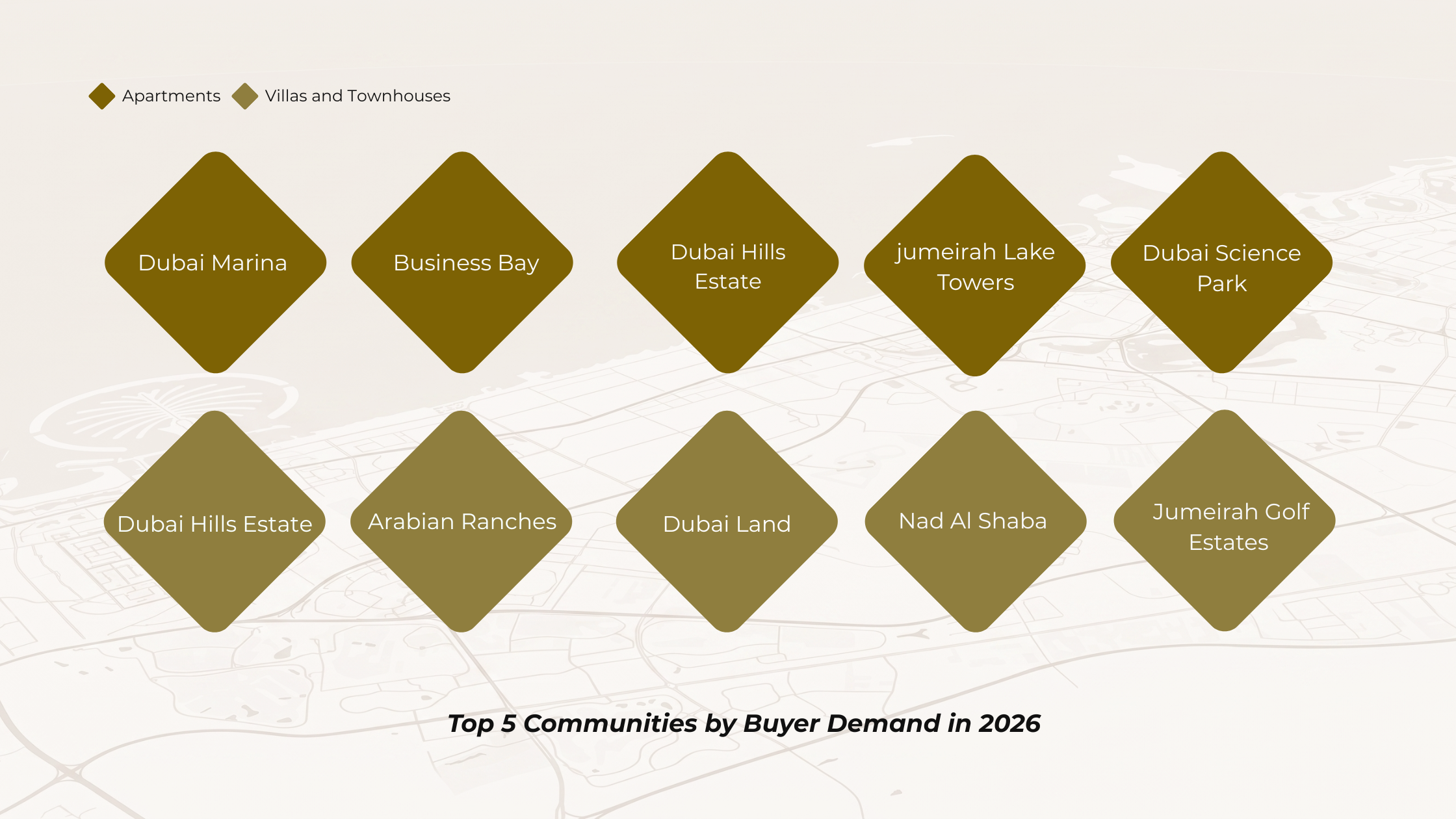
    Top 5 communities

    This transition requires high-net-worth individuals (HNWIs) to exercise sharp caution regarding secondary locations and generic asset types. The secondary market saw a dramatic 40% month-on-month drop in transaction volume in March 2026, heavily influenced by rising global caution, fluctuating mortgage activity, and a collective pause during the holy month of Ramadan.

    This decline serves as a stark warning that secondary, non-prime developments are highly sensitive to shifting buyer sentiments and impending localized oversupply.

    Investors who chase high-volume, lower-tier properties based on historical performance metrics are likely to face compressed yields and slower capital appreciation as the market stabilizes throughout the remainder of the year.

    Consistency, however, remains absolutely ironclad within the ultra-luxury and iconic trophy-asset segments. Investments in high-end luxury real estate reached AED 87.71 billion in Q1 2026—a powerful 26% year-on-year increase.

    This elite micro-market remains entirely insulated from broader economic cooling because its underlying fundamentals are governed by scarcity. There is a finite amount of premium beachfront plots in master enclaves like Palm Jumeirah or the unfolding contours of Palm Jebel Ali, and an equally restricted supply of ultra-luxury penthouses overlooking the Burj Khalifa.

    The global ultra-wealthy demographic continues to view Dubai as an irreplaceable sanctuary due to its safety, world-class infrastructure, and highly favorable lifestyle proposition.

    For the DXB VIP clientele, the mandate for 2026 is clear: avoid the noise of mass-market volume, exercise rigid caution in secondary communities, and focus exclusively on architectural masterpieces and finite land assets that promise multi-generational value retention.

  • The UAE Just Quietly Made It Easier for Free Zone Businesses to Move to the Mainland

    The UAE Just Quietly Made It Easier for Free Zone Businesses to Move to the Mainland

    If your business has been established in an Emirates free zone in recent years, you may have often wondered:

    “How will I be able to sell my products to customers on the mainland?”


    Traditionally, this meant going through a difficult process. Liquidation of the free zone entity, creation of a new one in the mainland, contract transfers, financial changes, visa changes – all taking many months. But not anymore.


    The Emirates government quietly introduced amendments to legislation. And most entrepreneurs have yet to catch up.


    Why This Matters for Foreign Founders

    Under the previous setup, founders had to make an either/or decision straight off the bat: free zone (cheaper, 100% ownership, forbidden from trading outside the free zone) or mainland (greater access to the whole UAE, costlier, with higher compliance).

    They picked the former. Their startup expanded. Now they were in trouble.

    A consultant in Israel expanding his client base in Saudi Arabia through Dubai. A German fintech requiring UAE consumers for their services. A British e-commerce founder discovering his best customers were located in Abu Dhabi.

    They all faced the same brick wall: rebuild their startup or live with restrictions.

    New regulations took down that wall.


    The Three Scenarios That Just Got Easier


    1. Transfer from free zone to mainland.

    A registered entity in a free zone now can relocate to the mainland without being dissolved, retaining registration, contracts, and banking relationships, all without having to reincorporate.


    2. Establishment of free zone branches in the mainland.

    Free zones and financial free zones now allow their registered companies to establish branches or offices in the mainland area, as long as they have the necessary license. This enables companies, whether professional services firms, tech companies, consulting firms, or holding companies, to conduct business outside the free zone area without making any structural changes.


    3. Transfer from one free zone to another.

    Need to move from IFZA to DMCC because you’ve become a commodities trader? You can without losing the benefits of the original company structure, record, and relationships.


    What It Does Not Do

    And herein lies the biggest mistake most blogs are making on this issue. Yes, these changes make it easier to change locations but no, these changes do not blur the lines between jurisdictions. Your corporate tax position remains highly relevant.

    Companies established in free zones who move to the mainland (or establish mainland branches), would have to keep the accounting for their free zone and mainland activities separated to retain their ability to enjoy tax treatment in the free zone.

    Mainland branches of Qualified Free Zone Persons are deemed a domestic Permanent Establishment and income derived through domestic PE shall be determined as if it is the separate and distinct entity which shall be subject to corporate tax rate of 9%.

    Note: you can move around as much as you want. You will have to pay attention to details as you did before. What has changed, is the freedom in structuring your operations. That’s why today we observe more requests from clients regarding restructuring than registration only.


    What Founders Should Actually Do Right Now

    Three things founders should really be doing right now

    Are you currently working with UAE mainland clients? If the answer is no, then opening a branch on the mainland under the new rules will make perfect sense. You’ll preserve all the advantages of having a free zone company but be able to invoice UAE mainland clients from the branch. Easy peasy. No tax on international income and legal invoicing.

    Have you outgrown your current free zone?

    If you initially decided to establish your company in a cheaper free zone, but your business has become too big for it, especially when it comes to trading, finances, or any regulated services, then transferring to a credibility-oriented free zone such as DMCC or DIFC makes sense. Your business history remains untouched by such an operation, and banks see that. Potential investors will see it too.

    Are you planning to establish a company soon?

    Don’t complicate your situation by over-engineering it. The new flexibility allows for the possibility that you won’t incur as heavy costs for mistakes at the very beginning of your venture. Be realistic and pragmatic.


    A Quiet Story Behind the Main Story

    The UAE has taken many steps towards making it easier to avoid the problems involved with entering new foreign business environments once only. Officials in the free zones have made great progress in improving their process. By 2026, almost all the zones will implement online procedures, electronic signatures, and rapid approval systems. Changes in the Commercial Companies Law have been the most important reforms recently.

    In conclusion, any entrepreneur who is contemplating operating in Dubai should know that the UAE makes it easy to enter, operate, and succeed without starting anew.


    How DXB-VIP Can Assist You

    The past six months have seen us helping our clients to restructure according to the new regulations, by relocating free zone companies to mainland entities, switching registration between free zones, and reconciling the new flexibility with corporate taxation.
    If you’re unsure whether your existing structure is still suitable for your business needs, or you’re planning on establishing a presence in Dubai and starting off on the right foot from day one, this is precisely what our consultations can assist you with.

    Free consultation of 30 minutes:

    • Assessment of restructuring for your existing UAE company
    • Assessment of Free Zone versus Mainland according to the new regulations
    • Tax consequences of setting up an entity
    • Banking and visa continuation


    Frequently Asked Questions

    1. Can a UAE free zone company really move to the mainland without liquidating in 2026?

    Yes. Under the amended Commercial Companies Law and Dubai Executive Council Resolution No. 11 of 2025, free zone companies can now transfer their registration to the mainland, to other free zones, or to financial free zones — keeping their legal identity, contracts, and trade history intact.


    2. Does this mean free zone companies can now sell to UAE mainland customers freely?

    Not directly — but it’s much easier. Free zone companies can now set up mainland branches or representative offices to serve mainland clients, without restructuring their core company.


    3. Will moving affect my UAE Corporate Tax position?

    Potentially. Free zone companies that operate on the mainland must maintain separate accounting to preserve their 0% Qualifying Free Zone Person status on qualifying income. Mainland branches are taxed at 9% on attributable income. Our accounting team handles this end-to-end.


    4. Should new founders still start in a free zone? For most foreign founders, yes — particularly with one of the 15 major free zones we work with. The new rules make the choice less permanent and easier to adjust later.


  • Mainland vs Free Zone vs Offshore: Which One to Choose?

    Mainland vs Free Zone vs Offshore: Which One to Choose?

    The most critical decision for any foreign investor in the UAE is registering their company in Dubai. If your registration is correct, you receive 100% ownership, almost no corporate taxes, unrestricted market access for your business, plus family residency permits. If you do it incorrectly, you will be forced to spend $20K-$30K and up to 18 months re-registering for a different jurisdiction.

    This article provides the three primary structures available to foreign investors in 2026 – Mainland, Free Zone, and Offshore – as compared against the seven decision criteria that really matter when registering a company in Dubai. By the end of this article, you will know which structure will suit your business model the best.


    A Glance at the Three Types

    Here’s the most basic summary.

    • Mainland – You can trade anywhere in the UAE, have the ability to bid for government contracts, and have a freer hiring practice (You can hire anyone and get a licence from the Dubai Department of Economy & Tourism).
    • Free Zone – 100% foreign ownership, you have dedicated sectors (DMCC, IFZA, DAFZA, Dubai Internet City, Meydan, etc.), faster and easier setup, but you will need to go through an agent/distributor to trade directly into the UAE mainland.
    • Offshore – You are creating a holding company for your current assets/doing business for asset protection globally; you cannot operate in the UAE marketplace; you are not provided with residence visas in the UAE.

    Let’s compare the types of jurisdictions offered in the UAE.


    1. Foreign Ownership

    • Mainland: Since 2021, foreign investors can own 100% of a mainland LLC across more than 1,000 commercial and industrial activities. A small number of “strategic impact” sectors still require an Emirati partner — your consultant should confirm before you commit.
    • Free Zone: 100% foreign ownership has always been the standard. No local partner required, ever.
    • Offshore: 100% foreign ownership.
    • Verdict: All three structures now offer full foreign ownership for most business activities — the old “you need a local sponsor” rule is largely a thing of the past.


    2. Market Access

    • Mainland: Full access. You can sell directly to consumers, businesses, and the UAE government anywhere in the country. Mainland companies are the only ones that can bid on UAE government contracts — a market worth tens of billions of dirhams annually.
    • Free Zone: Excellent for international trade. Restricted for direct sales into the UAE mainland — you’ll typically need a local distributor, a commercial agent, or a separate mainland branch. For e-commerce, services, and B2B export, this is rarely a problem.
    • Offshore: Cannot conduct business inside the UAE. Used for international operations, holding structures, and international invoicing only.

    Verdict: If your customers are UAE residents or the UAE government, you need a mainland. If your customers are global, a free zone is faster and cheaper.


    3. Tax Position in 2026

    The Federal Corporate Tax of the UAE is now implemented; we will describe their position per entity type.

    • Mainland: taxed at 9% on taxable income greater than AED 375,000 and not at all at income less than that. VAT of 5% applies when total sales exceed AED 375,000.
    • Free Zone: qualifying free zone persons (QFZP) can receive the benefit from the 0% corporate tax rate on qualifying net income, if such persons meet all substantive requirement, prepared and filed audited financials annually and recorded no revenue derived from mainland sources. Free zone entities/property must register and file an annual return with the Ministry of Economy and Commerce.
    • Offshore: entities generally fall outside of the UAE federally, only global trends which require economic substance impact how and if an offshore corporation will be treated under the global law.

    Verdict: For those business engaged primarily in either qualifying free zone or differently sourced income, the QFZP remains the most efficient tax structure, provided the organization duly complies with all requirements.


    4. Cost of Setup and Renewal

    Indicative annual costs for 2026:

    • Mainland: AED 15,000 to AED 30,000 for license and basic setup. Office rent (mandatory in most cases) adds AED 25,000 to AED 100,000+ depending on location.
    • Free Zone: AED 10,000 to AED 25,000 for the license. Flexi-desk options from AED 5,000 to AED 8,000 per year. Some free zones bundle visas into a single package.
    • Offshore: AED 10,000 to AED 18,000 for the license. No physical office requirement.


    5. Visa Eligibility

    • Mainland: Visa allocations are linked to the number of square feet in your office. For an average 200-square-foot office, you may have access to multiple investor and employee visas. There is no upper limit on the number of visas available to you if you continue to scale up your office size accordingly.
    • Free Zone: Most free zone jurisdictions offer a fixed allocation of visas that depend on your package tiers — generally between (1) and (6) for each tier. The upgrade process is simple.
    • Offshore: There are no residence visas available for offshore companies. This is by far the largest drawback of having an offshore company as a launch pad for starting a new business in the UAE.

    Verdict: If you and your family want to live in Dubai, you need either a mainland or a free zone with a visa package. DXB-VIP’s residency team handles the entire visa stamping process alongside company formation.


    6. Bank Account Opening in the UAE

    UAE banks have tightened compliance significantly. In 2026, all three structures can open corporate accounts — but the approval rate varies sharply.

    • Mainland: Highest approval rate. Local banks see mainland licences as low-risk and well-regulated.
    • Free Zone: Strong approval rate, particularly for established free zones (DMCC, IFZA, DAFZA, ADGM, DIFC). Newer or lesser-known free zones may face longer KYC reviews.
    • Offshore: Hardest. Many UAE banks now decline offshore-only structures entirely. Workarounds typically involve a parallel mainland or free zone entity.

    Opening a corporate bank account in Dubai is where most foreign investors get stuck — even after their business trade license is approved. We open multiple accounts in parallel for our clients to ensure at least one approval.


    7. Time frame of Business Setup in Dubai

    • Mainland: 1 to 2 weeks for the license with DET, plus 2 to 3 weeks for visa stamping.
    • Free Zone: 5 to 10 working days for the license in most zones. Some free zones (IFZA, Meydan) can issue license in 48 hours.
    • Offshore: 5 to 7 working days. Fastest, however, limited to operation within the UAE.

    Common Mistakes to Avoid

    • The cheapest free zone is chosen without verifying if it will accept banking in that zone. Unfortunately, any license for the purpose of opening a bank account will be useless if they do not accept a bank account.
    • Choosing to go offshore without realizing you are also required to obtain a residence visa is one of the biggest mistakes we rectify for clients who have previously worked with other consultants.
    • You mistakenly believe that free zone status means no taxes are payable; however, you must be in active compliance with the laws of that jurisdiction to remain at the 0%.
    • Underestimating what it takes to meet the substance is a big mistake, as it applies to all jurisdictions in the UAE, and there are real penalties if you do not comply.


    How DXB-VIP Helps?

    We’ve spent years helping foreign investors avoid these traps. Our team handles trade license selection, jurisdiction matching, document preparation, banking introductions, and residence visas — end to end, in one engagement.

    If you are considering a business structure (mainland, free zone, or offshore), we recommend scheduling a Free Consultation with one of our experts. Our team will provide you with a clear recommendation, detailed quotation, and a reasonable timeline — all at no cost or obligation.

    Book a free consultation with DXB-VIP →


    Frequently Asked Questions

    1. Will you be operating within the UAE or elsewhere?

    Inside the UAE, use the UAE mainland. Outside the UAE, use Free Zone or Offshore.


    2. Do you want to have a UAE temporary resident’s visa for you and your family?

    Yes, use either the UAE mainland or the Free Zone. No, use offshore.


    3. Are you operating in a sector that is regulated (Healthcare, Education, Financial Services)?

    Yes, if you wish to establish your business in a Free Zone, you will be required to select from a list of specific Free Zones (such as DHCC, KHDA, DIFC, and ADGM) that regulate those sectors in accordance with their specific requirements.


    4. Will you derive most of your business revenue from outside of the UAE?

    Yes, choosing the Free Zone with the QFZP will provide for tax effectiveness. No, the Mainland is more straightforward.

  • UAE Corporate Tax 2026: Q2 Deadlines Every Business Owner Must Know

    UAE Corporate Tax 2026: Q2 Deadlines Every Business Owner Must Know

    Dubai, 27 April 2026 — The compliance calendar is quickly evolving in Q2 2026 for all business owners in the UAE. The new Federal Tax Penalty regime became effective on 14 April 2026, and the Q2 VAT return filing deadline is coming up on 28 July. 

    Every company (whether in a free zone or on the mainland) operating in Dubai will need to be aware of what will become due in the following 90 days. Our accounting and tax teams at DXB -VIP have developed a listing of the essentials.


    What Has Changed: The New 14% Penalty Regime

    On April 14, 2023, the Cabinet made a decision that changes the manner in which late penalties for non-payment of taxes will be enforced in the United Arab Emirates. The previous system of applying daily accumulating penalties will no longer be used; rather, a fixed annual interest rate of 14% will be applied to the outstanding tax amount due once that payment is due until paid in full.

    In addition, there will not be any limit on the amount of interest that accumulates for any tax liability.


    The Q2 2026 Deadline Calendar

    The Q2 2026 Deadline Calendar is designed to help you identify key dates that every UAE business needs to know about between April and June 2026. Businesses should be up to date on all of their obligations regarding value-added tax (VAT), corporate taxes and record keeping. If you do not file your taxes promptly, you may run into issues with the Federal Tax Authority (FTA).

    Here are key deadlines to consider:

    • 28th April 2026 – Deadline for filing quarterly VAT returns (January-March 2026). Most businesses will be filing for the first quarter of the 2026 financial year on this date.
    • 28th July 2026 – Deadline for filing quarterly VAT for the second quarter (April – June 2026). All taxpayers need to have filed out and submitted their VAT returns.
    • Ongoing – Natural person registration for corporation tax. Those who have reached at least AED 1 million (or USD 272,000) in revenue in 2025 will need to register their corporation tax by 31 March 2026. If you missed the registration deadline, you will need to contact a registered tax advisor for assistance. The fine for late registration is AED 10,000.
    • Rolling – 20 business days to notify FTA of changes to trade licenses, ownership of your business and legal form. This is considered one of the biggest compliance violations and is extremely common.


    What’s Still Coming in 2026?

    The most significant annual event is still the deadline for corporate tax filings due on September 30, 2026, for companies that have their financial year ending on December 31, 2025. The effective due date for both the return and any tax owed to the FTA will be September 30, 2026, as the FTA considers filing and payment as a single obligation.

    Do not assume that free zone companies are exempt. All persons qualifying in the free zone and subject to a 0% tax rate must file before the deadline to maintain their preferential status.

    For businesses in the UAE that have a financial year that is not on January 1 to December 31, the deadline is the last day of the month that falls 9 months after the end of your financial year.

    So make sure you note the date for your company now!


    Three Things to Do This Week

    • Please make sure to obtain your Q1 VAT working papers if you haven’t done so already. Even if you do not file your VAT before April 28, the new 14% penalty for late payments will be severe.
    • Check whether your Corporation Tax is active with the EmaraTax registration portal. A late registration will incur an automatic fixed penalty of AED 10,000.
    • Please ensure your compliance calendar reflects all 2026 deadlines related to your fiscal year. In addition to all of the 2026 Corporation Tax deadlines for a calendar year end, September 30th should be the main date of focus for the majority of calendar-year companies.


    What Will Be New Next Year?

    The largest event is still the corporate tax return deadlines of September 30, 2026 for companies with a calendar year ending December 31, 2025. The FTA expects both the tax return and tax payable to be submitted by this date and will not view tax return submission as separate from tax payment obligations.

    Even companies that operate in Free Zones should not automatically assume that they are exempt from filing an annual tax return. Any company that is a Qualifying Free Zone Person and taxed at 0%, must file an annual tax return on time (within the applicable due date), or run the risk of losing its 0% rate status completely.

    The rule remains unchanged for businesses whose financial reporting year does not match the calendar year: 9 months from year-end. Ensure you note your specific due date.


    Three Items to Complete This Week

    If you have not already pulled together your working papers for VAT in Q1, now is the time as the new penalty regime of 14% for late payments will be very harsh on anyone who does not file by 28 April.

    Check your corporate tax registration on the EmaraTax portal. There is a fixed penalty of AED 10,000 for late registration.

    Make sure to add all compliance dates of your financial year for 2026 on your compliance calendar. The date that will be of the most importance to you if your business follows a calendar year will likely be 30 September 2026.


    Why Choose DXB-VIP?

    Our team handles end-to-end UAE tax compliance for mainland and UAE free zone companies. DXB-VIP is the best choice for handling UAE tax compliance in large and small businesses. With this service, we will help you file corporate taxes, prepare quarterly VAT returns, submit annual reports, and obtain correspondence with the Federal Tax Authority (FTA).

    We will manage the EmaraTax portal so that you can concentrate on expanding your business while we prepare for the filing of your first weekend tax return or recover from missing a submission deadline. 


  • Why 2026 Is the Right Time for Business Setup in Dubai

    Why 2026 Is the Right Time for Business Setup in Dubai

    Over the past two years, the UAE government has significantly simplified the business setup process.

    Foreign ownership now covers more than 1,000 mainland activities, while free zone companies benefit from improved access to mainland markets.

    At the same time, digital licensing through the Department of Economy and Tourism has reduced approval timelines dramatically.

    For investors seeking long-term growth, Dubai continues to stand out with:

    • 0% personal income tax
    • Competitive corporate tax structure
    • World-class banking infrastructure
    • Strategic global location connecting East and West\


    Choosing Between a Mainland and Free Zone License in Dubai

    Deciding if you should have a free zone or mainland license is one of the key choices you will make when establishing your business in Dubai.


    This choice doesn’t affect just where your business will be registered; it will directly determine the way you operate your business, who your potential customers are, how many visas your employees can obtain/sponsor, and what your long-term strategic goals will be.


    Mainland License in Dubai

    A mainland license gives your business the ability to operate anywhere in the UAE without restrictions, including trading directly with the local market, opening offices or retail locations across Dubai, and working with government or semi-government entities.


    It is typically the best option for companies that rely on a physical presence or have local clients that drive their growth.


    It is especially beneficial for retailers, food and beverage businesses, healthcare providers, construction companies, and professional service firms.


    These types of businesses often need direct access to the UAE market and benefit from being physically present.


    If a company plans to expand across the UAE, hire more employees, or secure government contracts, a mainland setup is usually the most suitable choice.


    Key points to understand include:


    • Mainland companies can operate anywhere in the UAE without restrictions
    • They can trade directly with local customers and businesses
    • They are eligible to work with government and semi-government entities
    • Most activities now allow 100% foreign ownership, removing the need for a local sponsor
    • Visa allocation is flexible and depends on office size, allowing easier team expansion
    • Operational costs can be slightly higher due to office space and government fees
    • Despite the costs, the market access and growth opportunities usually make it the stronger long-term option


    Free Zone License in Dubai

    Free zones are designed to attract foreign investors with streamlined processes, lower setup costs, and business-friendly regulations.


    Dubai has over 40 free zones, each catering to specific industries such as technology, media, finance, logistics, and consulting.


    A free zone license is ideal for businesses that primarily operate internationally or provide services outside the UAE.


    These setups are especially popular among consultants, digital agencies, e-commerce businesses, and startups looking for a cost-effective entry into the market.


    Free zone companies offer several advantages:

    • 100% foreign ownership
    • Fast and simplified setup processes
    • Access to modern infrastructure and business ecosystems
    • Potential eligibility for 0% corporate tax on qualifying income

    In many cases, free zones also offer flexible office solutions, including co-working spaces and virtual offices, which can significantly reduce initial costs.

    However, free zone companies traditionally face limitations when trading directly within the UAE mainland.

    To sell locally, you may need to work with a distributor or establish a mainland branch. That said, recent regulatory updates have started to ease these restrictions, giving free zone businesses more flexibility than before.


    Steps to Start a Business in Dubai

    Setting up a company in Dubai follows a clear and structured process. Understanding each step helps ensure a smooth and compliant business formation.

    The typical process includes:

    • Choose the right jurisdiction
      Select between mainland, free zone, or offshore based on your business activity, target market, and long-term goals.
    • Define your business activities
      Identify the exact activities your company will conduct, as this determines your license type and any additional regulatory approvals required.
    • Select the legal structure
      Choose the appropriate legal entity such as an LLC, sole establishment, or free zone company, depending on your ownership and operational needs.
    • Reserve your trade name
      Register a company name that complies with UAE naming regulations and ensure it is available for use.
    • Obtain initial approvals
      Secure preliminary approval from the relevant authority before proceeding with full registration.
    • Prepare and submit documents
      Complete all required application forms and submit supporting legal documents for company formation.
    • Receive your business license
      Once approved, your official trade license will be issued by the relevant authority, allowing you to legally operate.
    • Apply for visas (if required)
      Process investor, partner, or employee visas depending on your business structure and staffing requirements.
    • Open a corporate bank account
      Set up a business bank account in the UAE to manage transactions, payments, and financial operations


    Making the Right Choice

    The decision between mainland and free zone ultimately comes down to your business model and goals.

    If your focus is local market access, scalability, and operational freedom within the UAE, a mainland license is usually the better option.

    If your priority is cost-efficiency, speed of setup, and international operations, a free zone license may be more suitable.

    It’s also important to think long-term. Many businesses start in a free zone for simplicity and later expand into the mainland as they grow.

    Visa and Residency Options

    Setting up a company in Dubai opens the door to residency.

    Business owners can obtain:

    • Investor visas
    • Employment visas for staff

    Eligible entrepreneurs may also qualify for the 10-year UAE Golden Visa, offering:

    • Long-term residency
    • No need for a local sponsor
    • Flexibility to stay outside the UAE without losing residency

    How DXB-VIP Helps Your Business Setup?

    Setting up a business isn’t just about registration—it’s about choosing the right structure from the start.

    DXB-VIP provides a complete, end-to-end solution, including:


    Ready to Start Your Business in Dubai?

    Book a confidential consultation with DXB-VIP and turn your business idea into a fully operational company—in days, not months.

  • 5 Steps of Setting Up a Dubai Mainland Business Setup

    5 Steps of Setting Up a Dubai Mainland Business Setup

    Dubai is a global powerhouse of innovation, and in 2026, it remains the ultimate destination for entrepreneurs who refuse to settle for anything less than excellence. With its iconic skyline and a business ecosystem that moves at the speed of thought, the city offers more than just a strategic location—it offers a launchpad for global empires.

    Establishing a mainland business in Dubai is the most prestigious way to plant your flag in this market, providing you with 100% ownership, the ability to trade directly across all seven Emirates, and the unique advantage of bidding for high-value government contracts.

    However, in a city that thrives on “VIP” standards, your entry into the market should be just as elite. This is where the DXB-VIP approach makes the difference. While the path to success is paved with opportunity, navigating the regulatory landscape of the Dubai Department of Economy and Tourism (DET) requires precision, speed, and local expertise.

    A mainland setup isn’t just a legal requirement; it’s a strategic move that grants you unlimited scalability, allowing you to open multiple branches and hire a diverse global workforce without the geographic limitations found in Free Zones.

    As we move through 2026, the focus has shifted toward digital transparency and seamless integration. From selecting the perfect trade name to securing your official license, we highlight the “VIP” way to handle company formation in Dubai.

    Whether you are a solo visionary or a scaling corporation, understanding these pillars ensures that your business doesn’t just start — it dominates.

    This guide is crafted to cut through the noise and provide a clear, 5-step roadmap to launching your venture.

    Step 1: Determine Your Business Activity and Legal Structure

    The first step involves identifying the core activities your business will undertake. Dubai Economy and Tourism (DET), formerly DED, offers a comprehensive list of approved activities. You must select the activities that best describe your operations. Additionally, you need to choose an appropriate legal structure, such as a Limited Liability Company (LLC), Sole Proprietorship, or Corporation, depending on your business type, ownership preferences, and liability.

    Step 2: Reserve Your Trade Name

    Choosing a unique and catchy trade name is vital for building your brand identity. You must ensure that your proposed name is available and complies with the guidelines set by DET. Once approved, the name will be reserved for your business.

    Step 3: Apply for Initial Approval

    The initial approval marks the preliminary stage of your license application. You’ll need to submit the required documents, including passport copies, NOC (No Objection Certificate) from your sponsor (if applicable), and detailed information about your business activities. Obtaining initial approval from DET signifies that the government is open to your business idea.

    Step 4: Sign the Memorandum of Association (MOA)

    For entities like LLCs, the Memorandum of Association (MOA) is a legal document outlining the internal management structure and shareholder agreements.

    It specifies the company’s name, registered office address, business activities, share capital details, and the rights and responsibilities of each partner. The MOA must be signed and notarized at the notary public.

    Step 5: Get Your Trade License and Open a Bank Account

    After completing the steps above, you can proceed with paying the required license fees and obtaining your official trade license.

    This license allows you to legally operate your business in mainland Dubai.

    Following the issuance of the trade license, you’ll need to open a corporate bank account with a local bank to facilitate business transactions.

    How DXB-VIP Can Simplify Your Journey

    Setting up a mainland business in Dubai can be complex and time-consuming.

    DXB-VIP is your trusted partner, offering expert guidance and support throughout the entire process.

    Our business setup services in Dubai include:

    • Comprehensive market research and business planning
    • Activity selection and trade name reservation assistance
    • Document preparation and submission
    • Laisoning with government authorities and obtaining approvals
    • MOA drafting and notarization
    • Trade license issuance and visa processing
    • Corporate bank account opening assistance

    Conclusion

    Setting up a mainland business in Dubai is a rewarding venture with significant growth potential. By following these 5 steps and seeking the assistance of professional consultants at DXB-VIP, you can transform your entrepreneurial vision into a thriving reality.

    With Dubai’s economy and supportive business environment, your mainland enterprise is poised for success.

  • Back to the Bell: UAE Students End Distance Learning for In-Person Return

    Back to the Bell: UAE Students End Distance Learning for In-Person Return

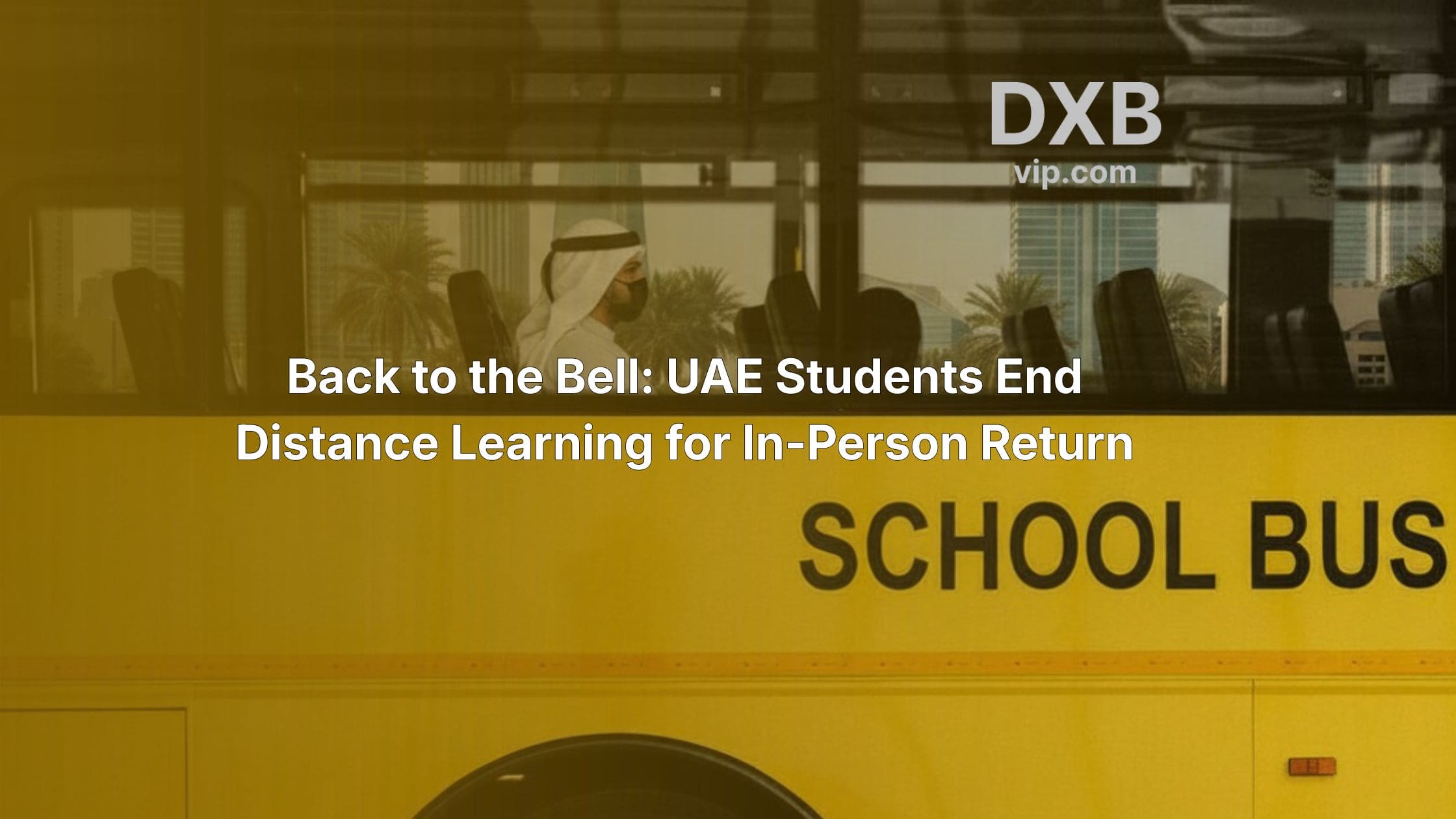
    The silence that has defined the UAE’s academic corridors since early March was finally broken this morning. From the sleek avenues of Downtown Dubai to the sprawling suburbs of Abu Dhabi and Sharjah, the rhythmic hum of yellow school buses returned to the tarmac. It was a morning marked by a sense of collective relief: students were finally reclaiming their desks.

    As of Monday, April 20, 2026, hundreds of thousands of students across the Emirates resumed in-person learning. The transition follows a seven-week period of distance education triggered by regional tensions, which have since eased following the implementation of a US-Israel-Iran ceasefire.

    For parents, educators, and most importantly, the students themselves, today represented more than just the end of a long commute from the bedroom to the laptop—it was a return to the heartbeat of the community.

    A Morning of Rebirth

    The scene at school gates today was one of vibrant energy. Starting at 6:30 AM, traffic congestion returned to its familiar density as school-run vehicles flooded the roads. Despite the heavier commute, the atmosphere was overwhelmingly positive.

    Students, many clad in freshly pressed uniforms for the first time in nearly two months, stepped out of cars and buses with visible excitement, trading virtual chat messages for face-to-face greetings with friends and faculty.

    While the “buzz” is back, the reopening is being handled with precision. Following inspections by the Knowledge and Human Development Authority (KHDA) in Dubai and the Sharjah Private Education Authority (SPEA), the majority of schools have reopened for on-campus education.

    While some families have opted to maintain online learning for the time being, the vast majority have rushed back to the classroom, eager for the social and developmental benefits that only a physical campus can provide.

    Modern Safety Architecture

    It is not about reverting to business as usual; it is about a renewed campus experience. The previous seven weeks did not merely serve online courses; they have seen changes to the entire school safety framework. Schools in the UAE now have in place an elaborate “Safety Standard,” which can only be described as one of the most comprehensive anywhere in the world.


    The highlights of this new era include:

    • Mastery of Safe Zones: Each campus now has its own “Safe Zones,” as well as assembly points, backed up by accountability technology that tracks every single pupil in real time.
    • Drills: Today, staff and pupils engaged in drills such as “shelter in place” and “reverse evacuation.” Everybody now knows exactly what to do when circumstances change unexpectedly.
    • Hybrid Flexibility: Private schools now enjoy the regulatory flexibility to switch between on-campus, hybrid, and online learning seamlessly, no matter what happens around them.


    UAE Students, a pic of bus stop sign


    The Protocol for the Modern Parent

    As the reopening commences, there has been a release of a “Parent Protocol” that will help in maintaining safety throughout this phase. It has been stressed by the school heads that in case of a situation like an alert, safety should always take priority over ease of pick-up.


    In the event of an alert at dismissal time, all the students will be required to stay at the premises under the constant supervision of teachers until the “all-clear” has sounded. Parents must avoid coming to collect their wards during such times to keep away from causing any confusion. Additionally, parents are advised not to contact the schools during the drill.


    Looking Ahead: Rebuilding the Rhythm

    In terms of priorities for educators during the rest of the week, it does not revolve around taking exams; instead, it is called “re-socialization.” The priority for principals across the nation has become getting back into a routine. There is structured wellbeing assistance included in the school routine to assist children in coping with an emotional transition from solitude to socializing.


    The first bell sounded in the city as a reminder of the following truth: the education system of the UAE is now stronger than it was before the upheaval.

    The screens are now switched off, backpacks are stuffed with everything required, and there are thousands of children entering the school buildings today for their classes.


    With students returning to schools all over the UAE and life in Dubai once again hitting its stride, our company’s services will be at your disposal in order to make your transition easier. Whether it is obtaining sponsorships for your children or facilitating the renewal process of your Golden Visas, we will manage everything with utmost privacy and professionalism, allowing you to concentrate on getting ready for the upcoming academic year. Connect with us to get to know more!

  • Global Energy Alert: Oil Prices Surges Past $100 Amid Strait of Hormuz Blockade

    Global Energy Alert: Oil Prices Surges Past $100 Amid Strait of Hormuz Blockade

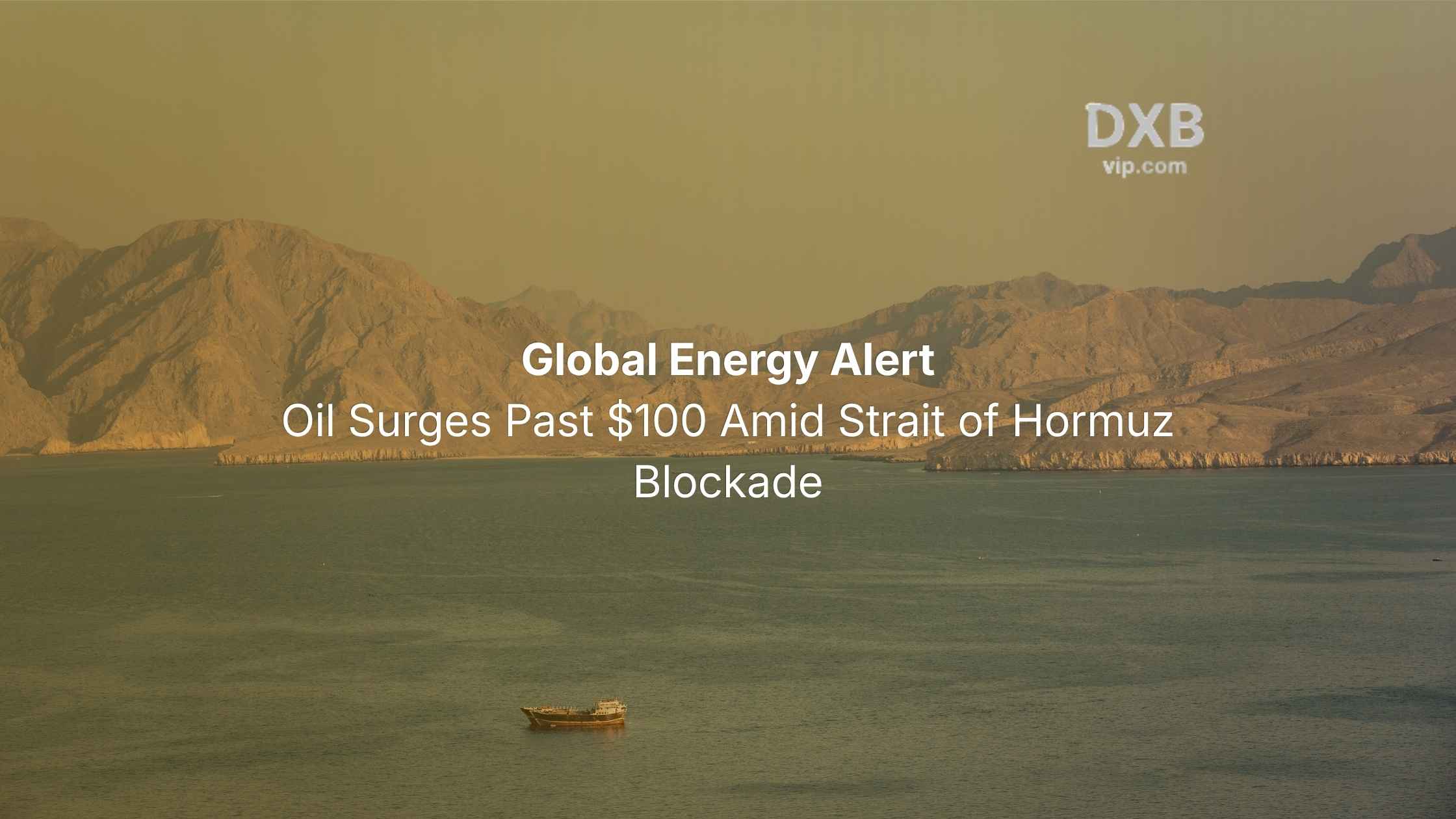
    A shock was felt across the global economy today after the price of crude spiked to over 7%, reaching the landmark level of $100 per barrel. The increase is coming amid plans by the U.S. Navy to impose a blockade on ports in Iran, where the strategic Strait of Hormuz is located.


    The Market Shift

    The failure of recent high-stakes talks in Washington to finalize a lasting peace deal has sent Brent crude futures up to $102.23, while U.S. West Texas Intermediate (WTI) climbed to $103.88.

    More strikingly, some physical crude grades are already trading at record premiums, reaching as high as $150 a barrel in certain markets. 


    Strategic Implications

    According to CENTCOM, the naval blockade will be applied to all sea traffic moving into and out of Iran’s ports located on the Arabian Gulf and the Gulf of Oman. Although freedom of navigation is still guaranteed for international vessels, due to increased military activity in the region, many oil tankers have chosen to avoid the region, thereby leading to a “wait-and-see” attitude in the global shipping industry.

    On the other hand, Saudi Arabia has made a statement indicating that their East-West pipeline can now transport 7 million barrels of oil per day.


    The DXB VIP Perspective: What This Means for Investors

    • Inflation Pressure: Continued high cost of fuel may impact construction and logistics worldwide, making off-plan developments even more important.


    • Investment Capital: Energy stability in the region has historically led to higher liquidity in the local high-end market.


    • Exclusivity & Robustness: Our DXB VIP clients prefer those properties that do not depend on global headlines. Dubai property remains a haven for any uncertain time globally.


    Connect With Our Experts

    Global economic shifts require more than just news — it requires a partner with local insight and global vision. We invite you to our headquarters to discuss how these developments may impact your portfolio. 

  • UAE Banks Hit Record Highs: Dh5.47T in Assets Fueling National Resilience

    UAE Banks Hit Record Highs: Dh5.47T in Assets Fueling National Resilience

    DUBAI, UAE – The UAE’s banking industry has now firmly established itself as the region’s biggest and strongest financial hub. According to the latest report released by the UAE Central Bank (CBUAE), gross banking assets have risen to an all-time high of Dh5.47 trillion ($1.49 trillion) as of February 2026.

    Such tremendous growth of 1.1% within just one month is coming together with an “Resilience Package,” introduced by the CBUAE in anticipation of the impact that international market changes may have on the country’s financial stability.

    The Dh5.47 Trillion Milestone: Key Figures

    The growth in asset base is an indication of an increasingly mature economy with adequate liquidity levels and high investor confidence.


    • Asset Growth: The total assets grew from Dh5.34 trillion at the end of December 2025 to Dh5.47 trillion at the end of February 2026.
    • Growth in Credit: Gross credit rose by 1.2% to Dh2.63 trillion with the growth being attributed mainly to the increase in domestic credit to both private and GREs.
    • Deposit Levels: The bank deposit base rose to Dh3.4 trillion with a 5.3% rise in personal deposits showing investor confidence in the banking sector.


    The “Resilience Drive”: Fortifying the Financial Front

    In tandem with these record-breaking figures, the CBUAE has introduced a comprehensive Financial Institution Resilience Package. This strategic move ensures that UAE banks remain liquid, capitalized, and ready to support the national economy regardless of international economic climates.

    The Resilience Toolkit includes:

    • Flexibility of Liquidity: Banks can now have access to up to 30% of their liquidity buffer requirement, creating enormous flexibility in funding.


    • Buffer of Capital: The relaxation of the CCyB will enable banks to continue lending to business organizations and individuals without facing any burden from the regulators.


    • Strength of Foreign Assets: The foreign assets of the CBUAE itself have now surpassed Dh1.08 trillion, giving a “bullet-proof” protection to the Dirham and its monetary base.


    DXB-VIP Insight: What This Means for the Elite Investor

    For the high-net-worth community in Dubai, these figures are more than just numbers — they represent a Safe Haven. As the UAE’s banking assets hit record highs, the region continues to pull ahead as a global “VIP” hub for capital.

    The stability of the banking sector ensures that property investments, business ventures, and luxury assets remain backed by one of the most secure financial infrastructures on the planet.