Author: devadmin

  • Middle East Professionals Embrace Career Changes to Boost Earnings and Skill Sets

    Middle East Professionals Embrace Career Changes to Boost Earnings and Skill Sets

    Adapting to New Opportunities: A Growing Trend in the Middle East

    In recent years, an increasing number of professionals in the Middle East have been taking bold steps to switch careers, leveraging their existing skills to explore new industries. This trend is driven by a desire for financial improvement, personal growth, and the opportunity to acquire new skills in a rapidly evolving job market.

    A Case Study: Ghassan Khairallah’s Career Shift

    Lebanese expatriate Ghassan Khairallah exemplifies this trend. After spending 12 years as a customer relationship manager at a Dubai bank, where he sold credit cards, loans, and investment products, Khairallah faced unemployment during the Covid-19 pandemic. Motivated by the uncertainty of his previous role and encouraged by his former manager’s suggestion, Khairallah used his negotiation skills to enter the real estate sector. He joined Huspy, a property technology start-up, as an agent in 2022 and quickly climbed to a sales director position.


    Khairallah attributes his success to his transferable skills and a commitment to integrity and customer loyalty—principles he applied in both banking and real estate. Today, Khairallah and his wife also run a property maintenance company, and he earns additional income from rental properties.

    The Regional Shift Towards Career Flexibility

    According to TASC Outsourcing’s Middle East Workforce Hopes and Fears Survey 2024, 44% of regional employees are considering changing employers within the next year, significantly higher than the global average of 28%. The survey highlights that 71% of respondents plan to ask for a pay raise, and 67% are seeking promotions. Notably, 67% of Middle Eastern employees are eager to learn new skills, compared to 47% globally.


    This trend is fueled by rapid technological advancements, with 63% of Middle Eastern professionals expecting artificial intelligence and robotics to impact their jobs within the next three years, compared to 46% globally. Recruitment experts emphasize that skills such as effective communication, leadership, critical thinking, and digital literacy are highly valued across industries.

    Challenges and Opportunities in the UAE Job Market

    Despite the potential for career change, the UAE job market remains highly competitive, with more jobseekers than available opportunities. Mark Timms, founding partner of GRG, notes that candidates who fail to meet the majority of job criteria often struggle to secure interviews. Nevertheless, there is a growing appreciation for candidates with adaptable skills that can transcend industry boundaries.


    Kristina Melsova, a Czech national, is another example of a professional successfully navigating multiple industries. Melsova has worked in banking, e-commerce, and the food ordering sector as an Agile coach, and recently launched her own start-up, atlaseek, in the travel and creator economy. She believes that having diverse experiences and being adaptable is crucial for success in today’s job market.

    The Value of Transferable Skills

    The ability to pivot between roles is increasingly valued by employers, as it demonstrates versatility and a capacity for growth. For professionals aged 30 to 45, the desire to change careers is often driven by the search for more fulfilling work and alignment with personal values and long-term goals. According to TASC Group’s Anil Singh, this demographic is the largest group actively seeking new opportunities.


    The leisure and hospitality sectors are experiencing significant attrition due to high workloads, while healthcare and social assistance workers have been under immense pressure since the pandemic. Professionals in trade, transportation, utilities, and education are also grappling with challenges that drive attrition.

    Navigating the Future of Work in the Middle East

    The dynamic nature of the Middle East job market continues to open doors for professionals willing to embrace change. Organizations that adapt their recruitment strategies and prioritize upskilling can attract a diverse talent pool, fostering innovation and resilience. As the job landscape evolves, professionals and employers alike must be prepared to pivot and leverage the full spectrum of available skills to thrive in a competitive environment.
  • Complete Guide on How to Get an Import-Export Business License in Dubai

    Complete Guide on How to Get an Import-Export Business License in Dubai

    Dubai has one of the world’s fastest-growing markets, which makes it a great place to do business. With good sea and air links, the UAE is only an 8-hour trip away for two-thirds of the world’s people. There are many ways to make money in Dubai, but the import-export business is one of the best. Setting up an import-export business in Dubai is easy because it has modern facilities and is in a great location. To help with this, the government has set up a number of e-services to make it easier to buy and export goods.

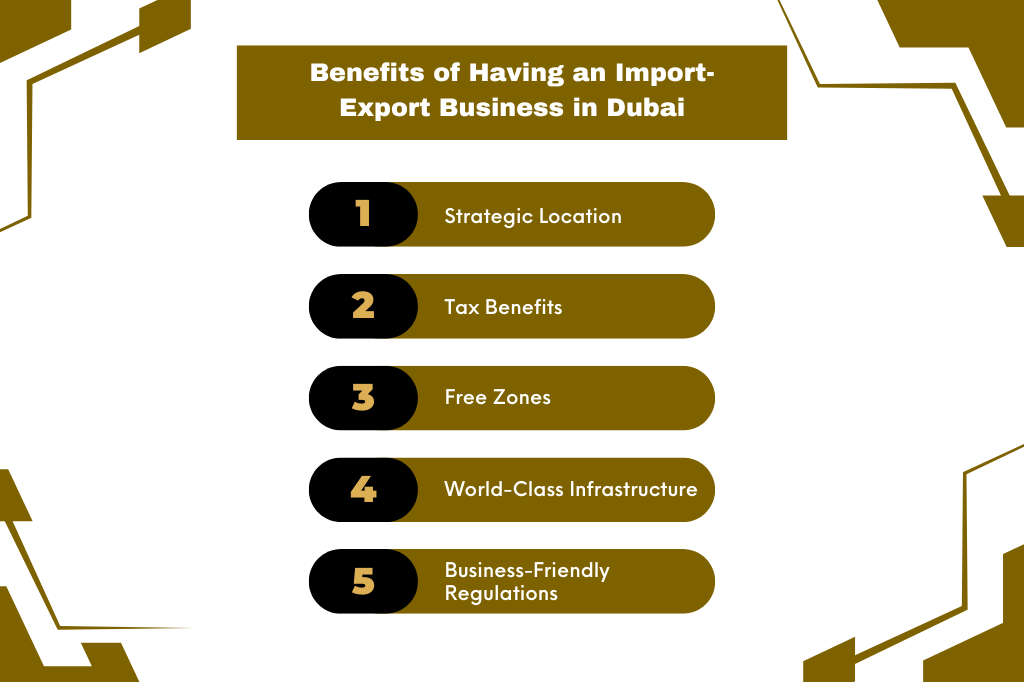
    Benefits of Having an Import-Export Business in Dubai

    • Strategic Location: Dubai connects major global trading routes between East and West.
    • Tax Benefits: No corporate or personal income taxes for most businesses.
    • Free Zones: Numerous free zones offer 100% foreign ownership and no import/export duties.
    • World-Class Infrastructure: Advanced ports, airports, and logistics facilities.
    • Business-Friendly Regulations: Simplified processes for starting and operating businesses.

    How to Get an Import-Export Business License in Dubai

    Getting a trading or general dealing license from the right people is the first thing you need to do to start an import-export business in Dubai. You can bring goods into and out of the country with this license. You need to sign up with the Dubai Customs department once you have the business license. For special or limited items, you need extra permission from the right government offices. For example, the Dubai Police need permission to trade in gold, the Dubai Narcotics Department needs permission to trade in chemicals, and the Dubai Municipality needs permission to trade in food items.

    Step-by-Step Guide to Getting an Import-Export Business License in Dubai

    1. Reserve the Trade Name:
      • Choose a unique trade name for your company.
    2. Select the Trading Activity:
      • Determine the specific trading activities your business will engage in.
    3. Appoint a Local Sponsor:
      • A local sponsor is required to start a business in Dubai.
    4. Select a Location:
      • Choose an office, shop, or warehouse location and secure a rent agreement.
    5. Sign the Memorandum:
      • Sign the memorandum of the company at the UAE notary public or the Department of Economic Development (DED) via E-agreement.
    6. Submit Documents to DED:
      • Submit the necessary documents to the DED and receive a payment voucher.
    7. Pay the Fees:
      • Pay the required fees to obtain your business license.
    8. Register with the Immigration Department:
      • Register your company with the immigration department.
    9. Get an Investor/Partner Visa:
      • Obtain an investor or partner visa for the company owner.
    10. Register with Dubai Customs:
      • Register your company with Dubai Customs and obtain an import-export code.
    11. Start Importing or Exporting Goods:
      • Once all registrations and approvals are complete, you can begin your import-export activities.

    Cost of an Import-Export Business License in Dubai

    The cost of obtaining an import-export business license includes:

    • Trade License Cost: Approximately AED 13,500
    • Import Export Code Fees: AED 350
    • Local Agent Service Fee: AED 10,000
    • Office Rent: Subject to availability, location, and area of the office (virtual office options available)

    Note: All fees are illustrative and subject to change.

    Documents Required for an Import-Export Business License

    To start an import-export business in Dubai, you need to submit the following documents to the DED:

    • Company name reservation choices
    • Company registration application form
    • Passport copy of the owner
    • Visa copy (visit visa or residence visa)
    • NOC letter from the current sponsor if the owner is already working in the UAE

    Dubai Customs Procedure:

    • Trade license
    • MOA of the company
    • Passport copy of the owner
    • Visa copy (visit visa or residence visa)
    • Rent agreement
    • Fees payment receipt

    Conclusion

    Starting an import-export business in Dubai is a promising venture due to its strategic location, modern infrastructure, and business-friendly environment. By following the steps outlined in this guide, you can obtain the necessary licenses and registrations to launch your business.

    For a hassle-free setup, DXB-VIP can assist you with the entire process, from obtaining licenses to handling all necessary documentation, ensuring a smooth start for your import-export business in Dubai.

  • Difference Between LLC and Sole Establishment In Dubai

    Difference Between LLC and Sole Establishment In Dubai

    Who wouldn’t want to open a business in Dubai? It is a place where businesses have been thriving. It wouldn’t be wrong to say that Dubai is the business hub in 2024. The United Arab Emirates is one of the most business-forward countries in the world. UAE offers unique opportunities for foreign national entrepreneurs and investors to set up the businesses of their dreams.


    Mainly you will find 2 business structures in the UAE: Sole establishment and LLC.


    A sole establishment is also known as a sole proprietorship. It is considered to be one of the most popular business structures in the UAE, but you may be wondering what the differences are when compared with an LLC (Limited Liability Company) in the UAE.


    Don’t worry – we are here to clear everything, so let’s get started!

    What is Meant by UAE Sole Establishment?

    Sole Establishment is also known as a Sole Proprietorship. It is a business owned and run by a single individual. This means that a company or corporate organization cannot own the business. This structure is available only to UAE nationals and GCC citizens. Foreign investors can set up a Sole Establishment but need to appoint a local service agent and get a professional trade license.

    What is a Limited Liability Company (LLC)?

    An LLC in Dubai allows foreign investors to have some ownership of the business, around 49%.

    However, the remaining 51% is owned by a UAE national or a company wholly owned by UAE nationals. This structure is suitable for most types of business activities, except for certain restricted sectors such as banking and insurance.

    Pros and Cons of Sole Establishment or Proprietorship in the UAE:

    Advantages

    • Full Ownership: The owner has 100% ownership of the business.
    • Simplicity: The setup process for a Sole Establishment is simpler and faster compared to an LLC in Dubai.
    • Direct Control: The owner has direct control over all business operations and decision-making processes.

    Disadvantages

    • Unlimited Liability: The owner’s personal assets are at risk if the business faces any debts or legal issues.
    • Limited Activities: Certain business activities may not be permissible under a Sole Establishment.
    • Local Service Agent: Foreign investors must appoint a local service agent, which can add to the operational costs.


    Also Read: Dubai: A New Era of 100% Foreign Ownership Beckons Investors


    Pros and Cons of an LLC Company in the UAE:

    Advantages

    • Credibility: An LLC is often viewed as a more credible and stable business structure compared to other forms of entities.
    • Operational Freedom: LLCs have the freedom to operate anywhere in Dubai, including mainland areas.
    • Variety of Activities: LLCs can participate in a broader range of business activities.

    Disadvantages

    • Local Partner Requirement: The requirement for a UAE national to hold 51% of the shares can be seen as a limitation.
    • Formation Process: Setting up an LLC can be more complex and time-consuming compared to a Sole Establishment.

    What is the LLC Setup Cost?

    All-Inclusive Commercial License Package: AED 25,500


    This package includes:

    • Trade license
    • Name and initial approval fees
    • Tasheel fee
    • Service charge
    • Company stamp
    • Memorandum of association/notary fee
    • Immigration card
    • Investor visa
    • Emirates ID
    • Medical test
    • Change of status
    • Visa stamping
    • Office sustainability contract
    • Office solution
    • Employment visa quota
    • Bank account assistance
    • Free VAT registration
    • Tax consultation

    Sole Proprietorship Setup Cost

    Service-Oriented Company Setup: AED 14,500


    This package includes:

    • Trade license
    • Name approval
    • Initial approval
    • LSA notary fee
    • Company stamp
    • Tasheel fee
    • Service fee
    • Complete documentation
    • Free business setup consultation
    • Dedicated consultant


    UAE Investor Visa Package: Additional AED 4,000


    This package includes:

    • UAE investor visa for life
    • Immigration card
    • Change of status
    • Emirates ID
    • Visa stamping
    • Office solution
    • Employment visa quota
    • Bank account assistance
    • Free VAT registration
    • Tax consultation

    Choosing the Right Structure

    Choosing between an LLC in Dubai and a Sole Establishment depends on various factors, including the nature of the business, the level of control desired, liability considerations, and capital requirements.

    Factors to Consider

    1. Ownership and Control: If you want to have full ownership and control over your business, a Sole Establishment might be the better option. But if you think you can share ownership with a local partner, an LLC might be the best option for you.
    2. Liability: Do keep in mind whether you can tolerate risks or not. An LLC offers limited liability protection, protecting personal assets, whereas a Sole Establishment exposes the owner to unlimited liability.
    3. Business Activities: Consider the types of business activities you plan to undertake. Some activities may require the flexibility and credibility of an LLC, while others might be feasible through a Sole Establishment.
    4. Setup Process: If you prefer a simpler and quicker setup, a Sole Establishment is easier to establish. On the other hand, an LLC might take longer but provides a more robust structure for larger or more complex operations.

    Conclusion:

    LLCs and Sole Establishments each have their own benefits and drawbacks in Dubai. Knowing the differences will help you a lot depending on your business goals, ownership needs, and liability concerns. LLCs offer credibility and flexibility, while Sole Establishments provide simplicity and full control. No matter which you choose, Dubai is a great place for your business to grow.

    DXB-VIP is a service provider that can help you with every aspect of setting up your business in Dubai. Whether you want to form an LLC or a Sole Establishment, DXB-VIP offers expert guidance throughout the entire process. They help with company formation, acquiring the necessary licenses, and obtaining visas. Additionally, they provide bookkeeping and accounting services to ensure your business runs smoothly and complies with all regulations. With DXB-VIP, you can be confident in an efficient business setup that fits all your needs.

  • How to Get  a Mortgage in Dubai as a Non-Resident?

    How to Get a Mortgage in Dubai as a Non-Resident?


    Foreign investors have been buying property in Dubai for years because it has world-class facilities, a great location, and policies that are friendly to investors. Many people think it’s hard to get a mortgage in Dubai if you’re not a local, but the process is actually easy and open to everyone. Here is a complete guide on how people who don’t live in Dubai can get a mortgage.

    Understanding the Mortgage Market in Dubai

    Non-residents can get a mortgage in Dubai in a number of different ways. Foreigners can borrow money from banks in Dubai as long as they meet certain requirements. Lenders are more interested in how well the applicant can pay back the loan, which is based on their income and security rather than where they live.

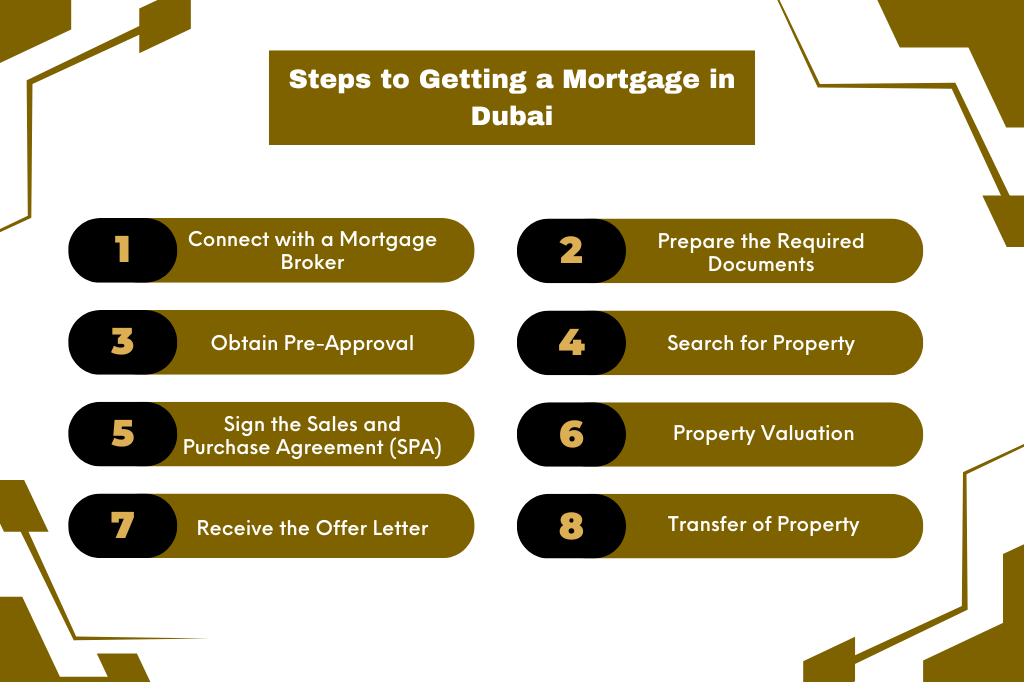
    Steps to Getting a Mortgage in Dubai

    1. Connect with a Mortgage Broker


    You don’t have to choose a home in Dubai before you apply for a mortgage. First, get in touch with a bank broker. They can help you through the whole process. Mortgage brokers know about the newest deals that different banks are giving and can help you find the best one. Most of the time, their services are free.


    1. Prepare the Required Documents


    People who don’t live in Dubai must provide certain papers in order to apply for a mortgage there. These usually consist of:

    • Proof of ownership of any businesses
    • Financial statements: The last 12 months of bank statements for both personal and business accounts


    Unlike some countries where salary slips are required, Dubai’s banks focus more on steady income, making it easier for business owners and self-employed individuals to qualify.


    1. Obtain Pre-Approval


    An important step that lets you know how much you can borrow is getting pre-approved. It also lets sellers know that you mean business as a buyer. After the first set of papers are sent in, pre-approval usually takes about a week.


    1. Search for Property


    The real estate market in Dubai moves quickly because agents are paid by fee and are very eager to close deals. When looking for a home, think about these things:


    • Suitability for both short-term holiday stays and long-term living
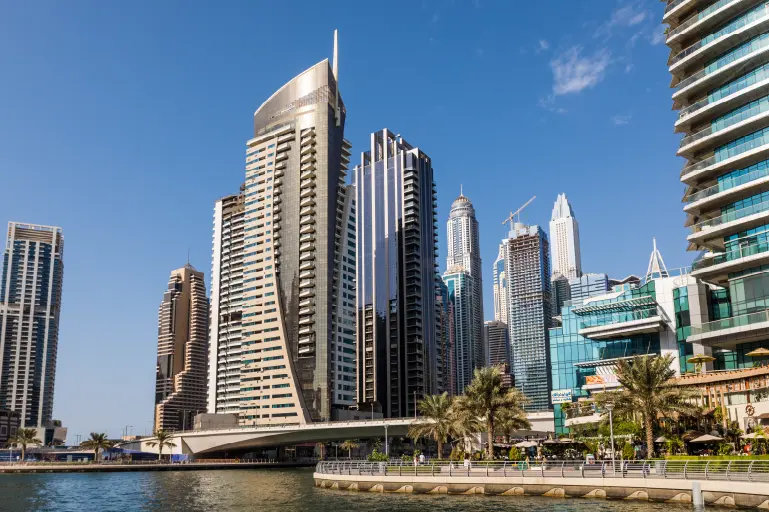
    • Prime locations such as Dubai Marina, which is known for its appeal and investment potential


    1. Sign the Sales and Purchase Agreement (SPA)


    The SPA spells out the terms of the sale and protects both the buyer and the seller. It is a legally binding document. It lists the price that was decided upon and promises that the deal will be completed within a certain amount of time, usually two months. Once the SPA is signed, the house will not be advertised any further. If either party backs out, they usually have to pay a 10% penalty, unless the mortgage is not accepted.


    1. Property Valuation


    Once you sign the SPA, the bank will look at the property to see how much it’s worth on the market and if it’s a good fit for the mortgage. This service generally costs about 1000 dirhams, which is paid for by the buyer.


    1. Receive the Offer Letter


    After the home is valued, the bank will send an offer letter with all the mortgage terms. To sign this paper, you will need to go to the bank in person. The bank will give you a manager’s check for the debt amount after you sign.


    1. Transfer of Property


    You can move the property into your name once you have the manager’s check. This process usually takes place at the office of the trustee, and both the buyer and the sale must be there. You can give power of attorney to someone else to represent you if you can’t be there. The move process is quick and easy, and it’s usually done in just a few minutes.

    Benefits of Getting a Mortgage in Dubai as a Non-Resident

    Minimal Documentation

    As a visitor with a tourist visa, you don’t need to show much paperwork. You only need to show proof that you own the business and bank records from the last 12 months. Residents, on the other hand, need to send in more detailed paperwork.

    Fast Process

    Getting a mortgage is a quick process that’s usually done in a few weeks. You don’t have to wait to apply for a mortgage until you can legally live in the country.

    Eligibility for a Golden Visa

    You can apply for a Golden Visa if you buy property worth at least 2 million dirhams. This long-term residence visa lets you live and work in Dubai without a sponsor. This makes it a good choice for business owners and investors.

    In Conclusion

    It is possible to get a mortgage in Dubai even if you don’t live there. With the right help, it’s also pretty easy. You can get a house in this exciting city if you talk to an experienced mortgage broker, get all the paperwork ready, and understand the process. Dubai real estate investing is a good idea because of the benefits, such as the low paperwork needs, quick approvals, and the chance to get a Golden Visa.


    DXB-VIP has a team of experts who can help you with any part of the service you need, making sure that your mortgage application goes smoothly and quickly.

  • Your Guide to Starting a Business in Dubai: Advice from Local Entrepreneurs

    Your Guide to Starting a Business in Dubai: Advice from Local Entrepreneurs

    If you’re living in Dubai, a city known for its limitless opportunities, it’s likely that the idea of launching your own business has crossed your mind at least once. To help you take that first step, we spoke with successful business owners who’ve already ventured down this path. From nightlife venues to boutique bakeries, bridal shops to beauty salons, these entrepreneurs have built thriving businesses in Dubai. However, their journeys haven’t been without significant challenges, sacrifices, and countless hours of hard work.
    Here’s the invaluable advice they have for aspiring business owners in Dubai.

    Sacrifice and Discipline Are Key

    “To achieve any meaningful success, you must be prepared to sacrifice,” says Farai Machingura, co-founder of House of Yanos. “This could mean sacrificing your time, money, friendships, or even relationships. It’s not an easy road, but it’s the only way to reach your goals.”


    Farai draws parallels between entrepreneurs and athletes: both require an unwavering focus and commitment to their goals. “People often overlook the sacrifices made, like selling belongings to fund your venture or losing touch with friends because you’re entirely focused on your dream.”


    In short, discipline is ineffective without sacrifice, and vice versa. The two go hand in hand on the journey to success.

    Educate Yourself on Local Regulations

    Many new business owners are intimidated by the regulatory landscape in Dubai, but it doesn’t have to be daunting. According to Chef Shaw Lash, owner of Lila Taqueria and Lila Molino, “Dubai Municipality (DM) is an invaluable resource for new business owners. They’re willing to help or direct you to someone who can.”


    Instead of paying high fees to corporate service providers, Shaw recommends visiting the DEAD Café for answers to your questions and guidance on the business setup process. “Invest time in understanding the regulations. It can save you money and headaches down the line.”

    Persevere Through Every Challenge

    “Persevere,” says Katie, co-founder of Billionaire Cookies. “Persevere through the confusing licensing process, finding the right location, and building connections. Even when you’re tired or feel defeated, keep pushing forward.”


    Katie compares perseverance to refueling a vehicle when you’re running on empty. “There were countless moments when I wanted to give up, but I learned that true perseverance means pushing through even when you’re on your knees.”

    Secure the Right Visa for Your Needs

    Pearl Yan, co-founder of La Gourmande, advises new entrepreneurs to explore their visa options early on. “Find out which UAE residence visa (investment visa, green visa, golden visa) suits your situation. Your company can sponsor your visa, even if it’s a sole proprietorship.”


    Pearl also recommends consulting business setup advisory firms like Creative Zone to see if any promotional packages offer both a trade license and a residence visa.

    Network Relentlessly and Stay Focused

    Networking in Dubai is crucial. “It’s not just about what you know, but who you know,” says Hollie Briant, owner of You&I Bridal and co-founder of Dazed and Engaged. “Connections can open doors you never imagined.”


    Hollie emphasizes the importance of being hands-on and having an emergency fund. “Dubai is an expensive city, and business has its ups and downs. Be prepared for seasonal fluctuations in foot traffic, especially during the hot summers.”


    “Most importantly,” she adds, “stay focused on your goals and avoid distractions. If you’re considering starting your own business, just go for it!”

    Stay Positive and Act on Your Ideas

    “Everyone can become an entrepreneur, but staying one is the real challenge,” notes Florian Delarue, founder of Digital Lab and My Dogtel. “Beyond common advice, my key tips are to maintain a positive mindset and act on your ideas.”


    Florian explains that a good entrepreneur knows how to handle unexpected problems. “Negativity will only harm your performance. Stay positive, think things through, but don’t let fear stop you from acting on a great idea.”

    Embrace the Unexpected

    “Every challenge is an opportunity for growth,” says Maher Tabchy, founder of Tab Chilli. “I wish I had known how much the unexpected obstacles would shape our success. Every setback was a learning opportunity, and those tough moments were actually the building blocks of what Tab Chilli is today.”


    Maher encourages new entrepreneurs not to fear obstacles but to embrace them as they pave the way for future success.

    Do Your Market Research and Choose the Right Location

    Finally, for new business owners in Dubai, extensive market research and a prime location are crucial. “Combining beauty with fashion gives us a competitive edge, turning our brand into a lifestyle,” shares another Dubai entrepreneur.


    Take the Leap

    Starting a business in Dubai requires hard work, resilience, and a strategic approach. But with the right mindset and preparation, you can turn your entrepreneurial dreams into reality. So, if you have an idea, don’t let it stay in your head, act on it and take that first step today.

  • How to Get a General Trading License in Dubai

    How to Get a General Trading License in Dubai


    Are you from outside of Dubai and want to start a business in one of the fastest-growing countries in the world? There are a lot of business options in Dubai. For example, you can get a general trading license, which lets you do a lot of different kinds of business, like selling food, electronics, furniture, clothes, fashion, and more. This is a full guide on how to get a general business license in Dubai.

    What is an IBC (General Business License) in Dubai?

    In Dubai, a general trading license lets you bring in, sell, and exchange a lot of different things and items. When you have a general selling license, you can sell a lot of different kinds of goods. The only things you can’t sell are tobacco and things that don’t meet health standards.


    Why You Need a Dubai General Business License

    A general trade license is necessary for foreigners who want to start a business in Dubai that sells different kinds of goods. This license is important if you want to trade in more than one industry, because it lets you run your business more efficiently with just one license. It is now easier and faster to start a business in Dubai thanks to this.


    What Does a General Trading Company in Dubai Do?

    In Dubai, a general trading business lets you buy, sell, and bring in and out different kinds of goods from different fields. This includes trade in textiles, electronics, tools, and other goods. Some goods that are controlled, like medicines and frozen meals, have to follow health and safety rules. Dubai’s Department of Economic Development (DED) makes it easier for businesses from around the world to do business with Dubai.


    Follow these steps to get a general business license in Dubai.

    1. Make sure the company name is okay:


    Send the DED three to four possible names for your business.

    1. Pick a legal structure and describe the activities of the business:


    Choose a legal arrangement for your business and write down the things you want to do with it.

    1. Sending in the documents:


    Take important papers to a recognized center, like a copy of your passport, your residence visa or visit visa, and your Emirates ID. After checking the papers, the DED will then send a payment voucher for the license.

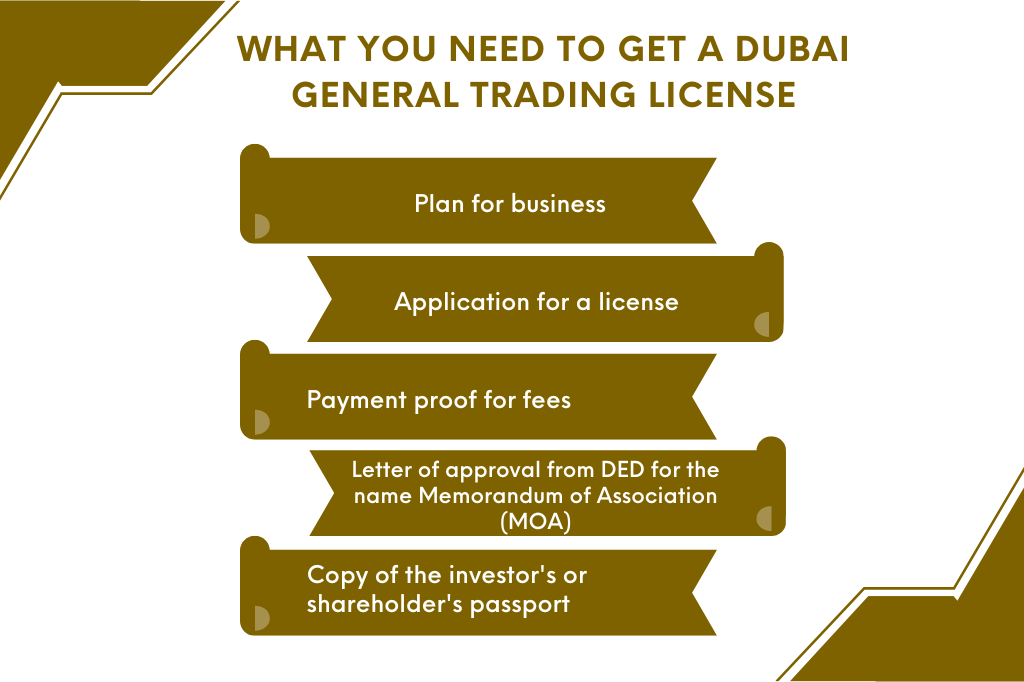
    What You Need to Get a Dubai General Trading License

    • Plan for business
    • Application for a license
    • Payment proof for fees
    • Letter of approval from DED for the name Memorandum of Association (MOA)
    • Copy of the investor’s or shareholder’s passport.

    General Business License for Dubai Mainland vs. Free Zone

    General Trading License for Dubai Mainland:


    Allows businesses to work all over Dubai by giving them more freedom and flexibility.

    General Trading License for the Dubai Free Zones:


    Foreigners can start businesses in a number of free zones, though some require a minimum share capital of AED 1 million.

    The Cost of a General Trading License in Dubai

    Cost Details Amount AED
    Trade name reservation cost 620
    Initial approval fees 120
    Tasheel fees for initial approval 345
    Tasheel fees for MOA 350
    License fees (Approx.) 12500-15000
    DED activity fees (General Trading) 15000
    Immigration card 750
    Total 29,685 AED

    Benefits of Starting a General Trading Company in Dubai

    • High-Quality Infrastructure: Flexible office spaces with top-notch amenities.
    • Easy Business Setup Process: The entire process can be completed in 3-4 working days if all paperwork is in order.
    • Minimum Capital Requirements: No need for a bank guarantee or share capital deposit.
    • Low Taxation Policy: Low corporate taxes with high repatriation benefits.
    • No Trade Barriers: Minimal start-up costs and no paid-up share capital requirements for mainland businesses.

    Dubai is a great place to start a general trade company because it has a lot of benefits and is easy to get to. DXB-VIP can help you set up your business in the UAE so that it is ready to go without any problems and in line with the rules.

  • How to Start a Cleaning Business in Dubai and the UAE

    How to Start a Cleaning Business in Dubai and the UAE

    The wealthy people who live in Dubai and the growing number of expats have made the market for cleaning services very profitable. Getting a license to start a cleaning business in Dubai is a huge opportunity for entrepreneurs from all over the world. Because of tourists, the city’s population keeps growing, which has raised the need for cleaning services in hotels, restaurants, free zones, and business areas. How to Start a Cleaning Business in Dubai: This is the Whole Story.

    What Does a Cleaning Company in Dubai Do?

    In Dubai, there is a cleaning service that works with both homes and businesses. Villas and apartments in residential areas can be cleaned, as well as bedrooms, kitchens, baths, and other surfaces. Retail stores, hospitals, offices, and other business buildings are all covered by the services, which use heavy-duty tools and special supplies. Cleaning companies in Dubai also clean, disinfect, and maintain factories, warehouses, and other industrial buildings in Dubai. They deal with hazardous materials and industrial trash.

    Benefits of Opening a Cleaning Business in Dubai

    Starting a cleaning company in Dubai comes with several benefits:

    • Low startup cost
    • Consistent income
    • Minimal overhead costs
    • Little customer interaction
    • Potential for high income
    • Flexible schedule with zero tax in free zones
    • Straightforward marketing plan
    • Business stability and independence

    Steps to Start a Cleaning Business in Dubai

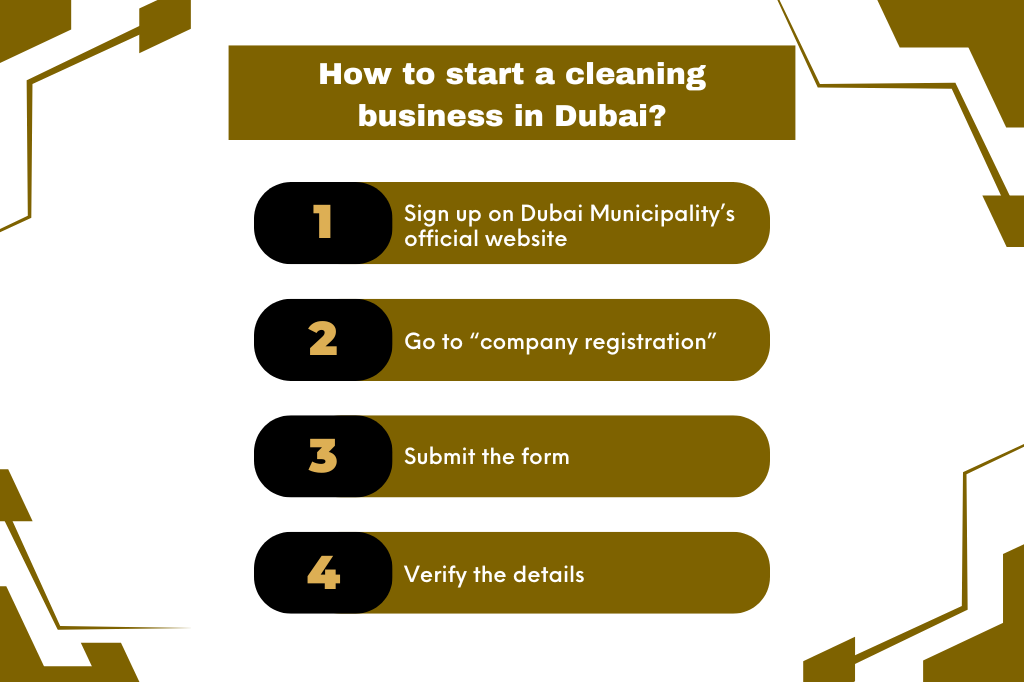
    1. Register Your Company:
    • Sign up on the Dubai Municipality’s official site with your credentials.
    1. Company Registration:
    • Navigate to the “Company registration” tab and fill out the required details, including personal and company information. Ensure to secure the channel by checking the “security” option.
    1. Submission and Confirmation:
    • Submit the form and verify the details. Once registered, you will receive a confirmation email with soft copies of your company’s logo, authorization, or licenses.

    Types of Cleaning Company Licenses in Dubai

    Depending on your business model, you can obtain various cleaning company licenses in Dubai:

    • Industrial Cleaning Company License: Allows full company ownership and registration as a proprietorship or civil company.
    • Residential Cleaning Company License: Requires registration with the Department of Economic Development (DED).
    • Commercial Cleaning Company License: Registers your company as an LLC.
    • Streets Cleaning Services License: Permits general cleaning services for streets, footpaths, and markets.
    • Sea & Shore Cleaning Services License: Covers the collection and disposal of marine waste and pollutants.
    • Building Cleaning Services License: Allows cleaning of interior and exterior areas of buildings.
    • Advertising Signboards Cleaning Services License: Includes cleaning of signboards on streets.
    • Runways & Roads Cleaning Services License: Covers manual and mechanical cleaning of runways and roads.
    • Yacht Cleaning Services License: Includes interior and exterior cleaning of yachts.
    • Car Cleaning License: Engages in car wash and cleaning services through movable or manual stations.

    Why Start a Cleaning Company in Dubai?

    • Essential Service: Easy and convenient with consistent demand.
    • Profitability: High potential with minimal investment.
    • Demand: High and luxurious lifestyle ensures a continuous need for cleaning services.

    Requirements for Starting a Cleaning Business in Dubai

    • Completed application form
    • Up to three company names
    • Copies of shareholders’ passports
    • Entry stamp or visa for foreigners
    • NOC from the current sponsor for national sponsors
    • Other approvals as per DED

    Cost of Starting a Cleaning Business in Dubai

    It is cheap and rewarding to start a cleaning business in Dubai. Usually, it costs about AED 15,000, which covers approval of the name, approval of the first documents, and the deed of formation. Visa fees, office rent, and running costs like utilities, staff salaries, and administrative costs are some of the other costs. A cleaning business license costs between AED 10,000 and AED 15,000. The amount you pay depends on what kind of cleaning you do.

    Conclusion

    In Dubai, starting a cleaning business is a good way to make money because it’s easy to do and people need your services.

    DXB-VIP can help you get the necessary registrations and approvals for your cleaning business in the UAE so that you can start running it without any problems.

  • How to Start an E-commerce Business in Dubai?

    How to Start an E-commerce Business in Dubai?

    The pandemic has changed a lot of things worldwide. One significant change that we see today is the dependency on E-commerce. People love online shopping, and why wouldn’t they? It is easy, you get to decide everything without worrying about the time or anything, and you get to know about the discounts timely as well.


    There has been a study conducted with the name “UAE Ecommerce Landscape” and it shows that UAE has the most advanced Ecommerce market in the MENA region. So if you are thinking of jumping into this industry, now is the right time. Here we will discuss the ways you can start your own e-commerce business in Dubai. So let’s get started.

    How to Open an E-commerce Business in Dubai?

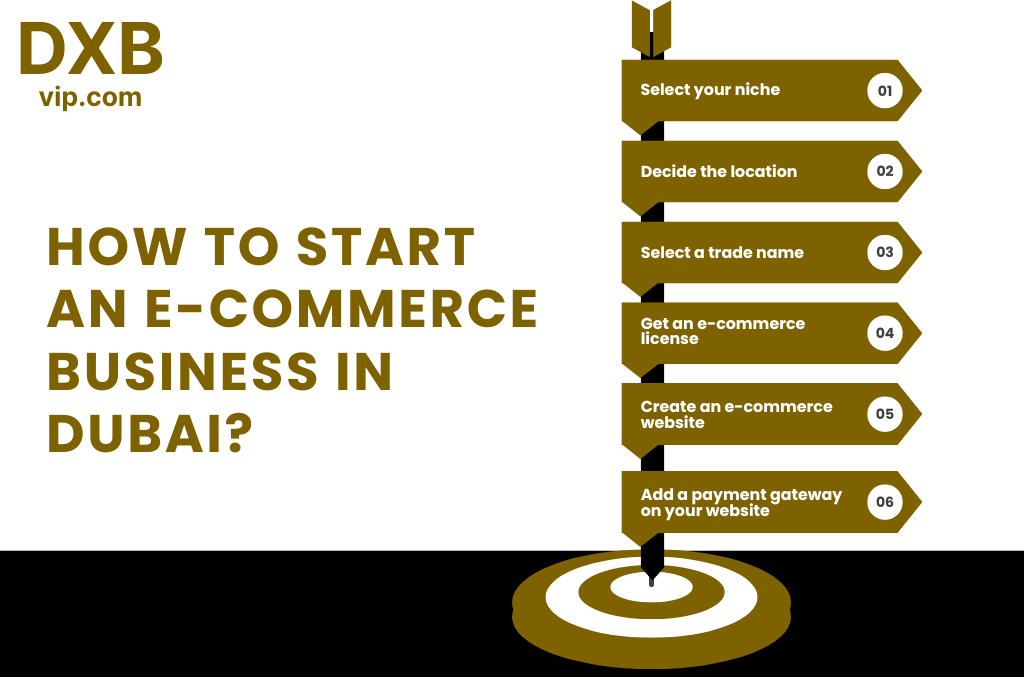
    These are the steps you would want to follow if you want to start an e-commerce business in Dubai:

    • Select the Right Niche For Your Product

    Before you just jump into starting a business, you need to know that the E-commerce industry is a very vast industry. You will have to understand what type of field you want to work in. There are more than 2000 industries and activities mentioned in the DED and you can choose from this list whatever excites you.

    • Decide The Location of Your Business Setup

    Next step is to decide where exactly you want to set up your business. Is it in the free zone Dubai or in the mainland? If you want to set up your business, you will need a legal address, and without a legal address, you can’t start.

    • Select a Trade Name for Your Business

    To get a trade name for your business, you need to fill out a form given by the Economic Department in Dubai and you have to submit it to the government. Try to make sure that your trade name has no offensive or religious words or anything that can be an issue for you in the future.

    • Get An Ecommerce License for UAE

    Once you are done with the steps mentioned above, now get an Ecommerce license for UAE. It will be issued to you by the DED (Department of Economic Development). If you have an e-commerce license in Dubai, you will be able to handle all sorts of e-commerce businesses there. If you have a free zone license, you can work as a local distributor, and with mainland license, you can trade your products in the local market.

    • Start Working on Your E-commerce Website:

    With increasing reliance on online shopping, you need to have an attractive and secure website for your business. Get a domain registered for your business. Once done, you will be able to have a customized website, but make sure it is user-friendly and has good content to promote your business.

    • Integrate a Payment Gateway For Your Business Website:

    To add a payment gateway to your website, you need a merchant account from your local bank or a payment service provider. The Telecommunications Regulatory Authority (TRA) is in charge of electronic transactions in the UAE. Make sure your payment gateways follow TRA rules to manage user traffic properly. Also, make sure your website developer offers 24/7 customer support to help with any payment issues, making the process smooth for your customers.

    What is the Cost of an E-commerce License in Dubai?

    The e-commerce license cost in Dubai can be anywhere from 15,000 AED to 28,000 AED. This cost keeps changing and depends on various factors like:

    • Where are you aiming to start your business setup in Dubai? Free Zone or Mainland?
    • What is the size of your business?
    • Do you require office space for your business to un?
    • How many visas have you applied for the business?
    • What is the type of your business?

    What Are The Documents Required to Get an E-commerce License in Dubai?

    Here are a few documents you need to get your e-commerce license in Dubai:

    • Passport copies of all the shareholders
    • Visa copies of all the shareholders
    • Copies of Emirate IDs of sponsors if any
    • Local service agreement or civil works agreement
    • NOC from the relevant authority
    • Draft of MOA (Memorandum of Association)


    Start Your E-commerce Business in the UAE Today!

    We hope the information provided in the article cleared all your confusion and helped you understand the process of setting up your own e-commerce business in the UAE. The process itself is very simple, but you can always consult DXB-VIP’s expert team and let them help you acquire an e-commerce license in Dubai and help you setup a business in Dubai’s free zone or mainland.

  • UAE Takes Historic Step with First Lottery Licence and New Gaming Regulations

    UAE Takes Historic Step with First Lottery Licence and New Gaming Regulations

    In a groundbreaking move, the UAE has made history by issuing its first lottery licence and unveiling a comprehensive set of regulations for the gaming industry. This significant development positions the UAE as the first Gulf state to legalize gaming, marking a new chapter in the region’s economic and entertainment sectors.

    A New Era for Commercial Gaming

    The General Commercial Gaming Regulatory Authority (GCGRA) has officially launched its website, providing a detailed roadmap for the future of gaming in the UAE. The website, which was previously password-protected, now outlines the process for obtaining casino licences and introduces plans for slot machines, poker tables, and other gaming activities.


    Applicants can now apply for gaming licences across all seven emirates, indicating that gaming opportunities could extend beyond just Ras Al Khaimah, Abu Dhabi, and Dubai. The GCGRA has also published the “Responsible Gaming Minimum Requirements,” setting the standard for safe and regulated gaming practices in the country.

    Vision for a Regulated Gaming Environment

    Jim Murren, chairman of the GCGRA, emphasized the importance of the UAE Lottery’s launch, describing it as a key event that establishes a disciplined, world-class regulatory framework for lottery activities. This move underscores the UAE’s commitment to creating a secure and enriched commercial gaming environment.


    According to the GCGRA, “Commercial Gaming” encompasses any game of chance or a mix of chance and skill, where money or valuable items are wagered for the chance to win a reward. The authority will oversee lotteries, internet gaming, sports wagering, and land-based gaming facilities, ensuring that games such as slots, roulette, blackjack, baccarat, and craps are conducted fairly and transparently.

    Current Status and Future Prospects

    As of now, the only approved licence is a lottery licence granted to The Game, a commercial gaming operator known for its expertise in game development, lottery operations, and related content. This milestone was announced in a press release on the GCGRA’s website.


    The licensing framework for gaming operators is now operational, paving the way for casinos to potentially open in the UAE. While no properties have been publicly granted a gaming licence yet, businesses that obtain a licence will be subject to audits every two years to ensure compliance with GCGRA standards.

    Commitment to Responsible Gaming

    The GCGRA mandates that all gaming operators implement a “Socially Responsible Gaming Programme” in line with its Responsible Gaming (RG) Framework. This programme includes player education, responsible marketing, employee training, and evaluation plans to measure effectiveness. Each licensed business must appoint a key person to oversee these efforts.


    Additionally, operators must establish a “qualifying domestic entity” (QDE) in the UAE or partner with one. A QDE is defined as a UAE company with substantial business operations within the jurisdiction.


    Kevin Mullally, CEO of the GCGRA, reaffirmed the authority’s dedication to global best practices in consumer protection and regulatory oversight. He emphasized that the regulatory framework is designed to ensure the integrity, fairness, and transparency of commercial gaming activities, including lotteries. The framework also provides consumers with tools to monitor and manage their gaming activities responsibly.

    Player Protection and Management

    The GCGRA has set forth several rules to protect players:

    • Engage Only with Licensed Operators: Playing with unlicensed operators is illegal and can result in severe penalties.
    • Stay Informed: Players should understand the games they play, including the risks and odds involved.
    • Manage Time and Money: Players are encouraged to set limits on their gaming activities using tools provided by operators and the GCGRA.
    • Access Support Services: Help is available for players facing challenges with their gaming behavior.
    • Voluntary Self-Exclusion: Players can opt for self-exclusion programmes to take a break from gaming activities.


    Operators will offer deposit limits on a daily, weekly, and monthly basis, allowing players to control their spending. Additionally, “cooling off periods” for online gaming will be available, enabling players to temporarily restrict access to gaming platforms.

    A Strategic Move for the UAE

    The UAE’s decision to legalize gaming reflects its broader economic and social strategy, aimed at enhancing its position as a leading global destination. By creating a well-regulated gaming environment, the UAE is setting the stage for significant growth in both its entertainment and economic sectors.

  • UAE’s New 10-Year ‘Golden’ Trade License: A Game-Changer for Business Growth?

    UAE’s New 10-Year ‘Golden’ Trade License: A Game-Changer for Business Growth?

    Dubai – The UAE is poised to revolutionize its business landscape with the introduction of a potential 10-year ‘Golden’ trade license, a move that could significantly alter the corporate environment for companies operating in the country. This initiative, still in its early stages, could extend business licenses up to a decade, offering unprecedented stability and long-term planning opportunities for businesses.

    The Future of Business Licensing in the UAE

    While some free zones and emirates in the UAE already offer multi-year business licenses, typically for 2 or 3 years, the proposed 10-year license under the ‘Golden’ business licensing program would elevate the corporate framework to a whole new level. Currently, longer-term licenses are often tied to extended rental agreements or offered as part of special promotions. For example, leading free zones have been known to provide licenses valid for up to 3 years, benefiting both the companies, by reducing the hassle of annual renewals, and the free zones, by collecting renewal fees in advance.


    This move towards multi-year licenses isn’t entirely new. Some emirates on the mainland also offer multi-year licenses, but these are usually restricted to ‘generic licenses’. However, the potential introduction of a 10-year license, and a 5-year ‘Silver’ license, as discussed on March 27, 2024, could transform how businesses approach licensing, offering substantial cost savings and greater predictability.

    Drawing Inspiration from the Golden Visa Program

    The concept of long-term licenses is inspired by the success of the UAE’s ‘Golden Visa’ program. Initially launched to attract investors with property investments of Dh2 million or more, the Golden Visa has expanded to include a wider range of individuals, creating a surge in investments and anchoring long-term residency in the UAE.


    This trade license initiative could similarly attract a new wave of investment, particularly if it follows the same principles of clarity and security that made the Golden Visa program so successful. By providing businesses with a longer-term outlook, the UAE is reinforcing its position as a global business hub, encouraging innovation, expansion, and value creation.

    Aligning with the UAE’s Vision for 2031

    The introduction of a long-term business license aligns perfectly with the UAE’s ‘We Are the UAE 2031’ vision, which focuses on sustainable economic development and enhancing the country’s global competitiveness. According to Damian Hitchen, CEO of Saxo Bank MENA, a longer-term license promotes stability and allows businesses to engage in more effective long-term planning.


    This new licensing structure would not only reduce the frequency of renewals but also offer businesses the consistency and clarity they need to thrive. Sachin Kerur, Head of the Middle East Region at Reed Smith, highlights that the UAE’s Golden Visa program has been pivotal in attracting high-skilled talent and investors, and the proposed trade license could have a similarly profound impact on the business community.

    The Bigger Picture: 100% Foreign Ownership and Beyond

    The 10-year trade license is seen as part of a broader set of reforms that began with allowing 100% foreign ownership for businesses in the UAE. This regulatory change led to a surge in new businesses and reaffirmed the UAE’s commitment to providing a business-friendly environment.


    The potential ‘Golden’ and ‘Silver’ trade licenses could offer the same benefits as the Golden Visa, giving businesses more certainty regarding tenure, status, and setup costs. With these reforms, the UAE continues to position itself ahead of other global economies, offering an environment where businesses can focus more on innovation and growth rather than the administrative burdens of frequent renewals.


    As the UAE continues to evolve its business regulations, the introduction of long-term trade licenses could be the next big step in cementing its status as a leading global business hub. Companies in the UAE can look forward to more stable operations, enabling them to plan for the future with confidence.