Author: devadmin

  • How to Open a Company in a Free Zone in Dubai

    How to Open a Company in a Free Zone in Dubai

    The free zones in Dubai present a multitude of options for company owners and entrepreneurs wishing to expand into the United Arab Emirates. Free zones are a popular option since they offer advantages including 100% foreign ownership, tax breaks, and expedited procedures. The procedures for establishing a business in a Dubai free zone will be walked through in this article, guaranteeing a quick and easy setup procedure.
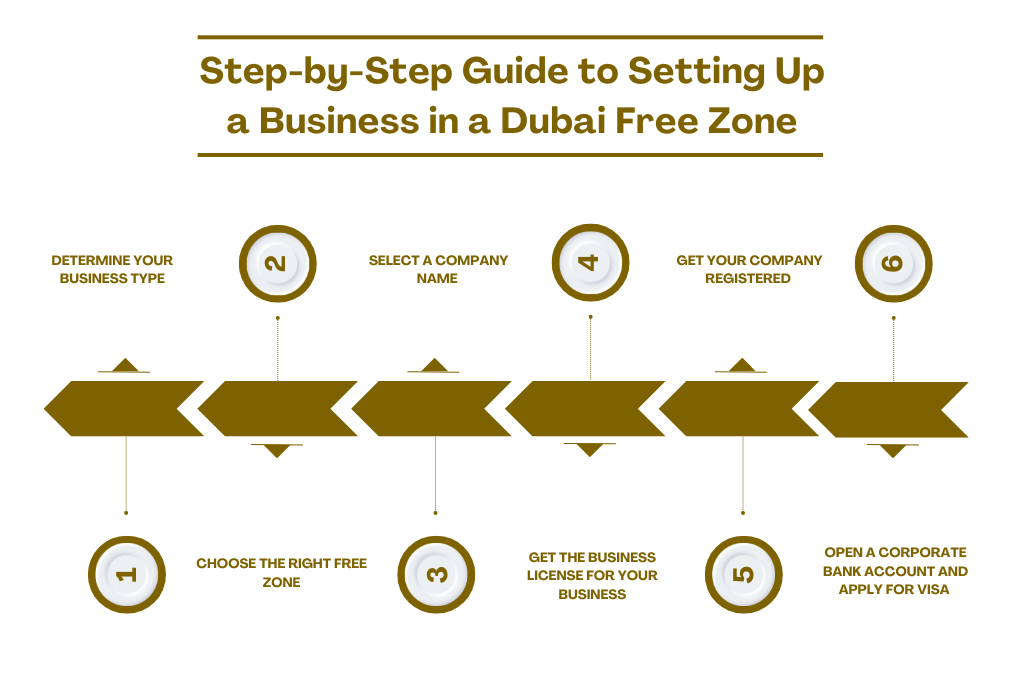
    Step-by-Step Guide to Setting Up a Business in a Dubai Free Zone:

    1. Determine Your Business Activity

    BusinessDetermining the nature of your company activity is the first stage. Free zones in Dubai serve a wide range of businesses, including media, technology, finance, logistics, and healthcare. Determining your line of business will enable you to select the best free zone and guarantee that you adhere to all rules and specifications.

    2. Choose the Right Free Zone

    After deciding on your business activity, do some research and choose the free zone that most closely fits your industry and your objectives as a company. Think about things like accessibility to support services, facilities, cost structure, and location. Select the free zone that will benefit your company the most out of all of them, as each one has unique advantages.

    3. Select a Company Name

    Choosing a company name is a very important step in the registration process. The name that you choose for the company should be according to and should follow the rules of the naming conventions of the chosen free zone. Remember, the name of your company should not violate any trademark laws. Generally it is good if you propose several names in case your preferred name is already taken or not permissible.

    4. Apply for a Business License

    The next step you will need to take is to apply for a business license. The type of license you need will depend on your business activity. Different types of businesses have different types of licenses. Common license categories include:

    • commercial licenses
    • industrial licenses
    • service licenses
    • trading licenses.

    You also have to prepare the important documents, which typically include:

    • Completed application form
    • Business plan
    • Passport copies of shareholders and directors
    • Proof of address
    • No-objection certificate (if applicable)

    5. Secure Office Space

    Getting office space in the free zone will be necessary, depending on the type of business you run.Executive offices, warehouses, and flexi-desks are just a few of the office space options available in free zones. Select a location that fits both your operating demands and price range.

    6. Register Your Company

    Send your application and the necessary paperwork to the free zone authority so that your business can be registered. After reviewing your application, the authority will issue your business licence and registration certificate if all is in order. It could take a few days or a few weeks to complete this process.

    7. Open a Corporate Bank Account

    After registering your business, you must create a corporate bank account in Dubai. Select a bank whose services correspond with the requirements of your company. Documentation like your business licence, the certificate of company registration, and copies of the directors’ and shareholders’ passports will be needed by the bank.

    8. Obtain Visas

    You have the right to apply for resident permits for both yourself and your staff as a business owner operating in a free zone. The size of your office space and the laws governing free zones will determine how many visas you are able to apply for. Medical examinations, Emirates ID registration, and visa stamping are steps in the visa application procedure.

    9. Comply with Regulatory Requirements

    RegulationsMake sure your company complies with all legal requirements, such as those related to office lease renewals, visa applications, and licence renewals. You can stay in good standing with the free zone authorities and steer clear of legal problems by following these regulations.

    Conclusion

    There are various procedures involved in setting up a business in a Dubai free zone, from selecting the appropriate free zone to securing the required permits and visas.You may successfully traverse the process and launch a profitable business by adhering to this guidance. DXB-VIP offers a team of professionals who can assist you with all aspects of the necessary service if you need professional support setting up your business.
  • Understanding Corporate Tax in the UAE

    Understanding Corporate Tax in the UAE

    The United Arab Emirates (UAE) is known around the world as a great place to do business. Its prime location, strong infrastructure, and friendly tax policies make it appealing to both individuals and large companies. Over a million people want to open a business in Dubai, which is a hub for businesses from all over the world right now. But why is the UAE a place where business is done? One of the main things that draws companies to the UAE is its corporate tax system, or rather, the fact that most businesses don’t have to pay any taxes.


    Corporate Tax Landscape in the UAE

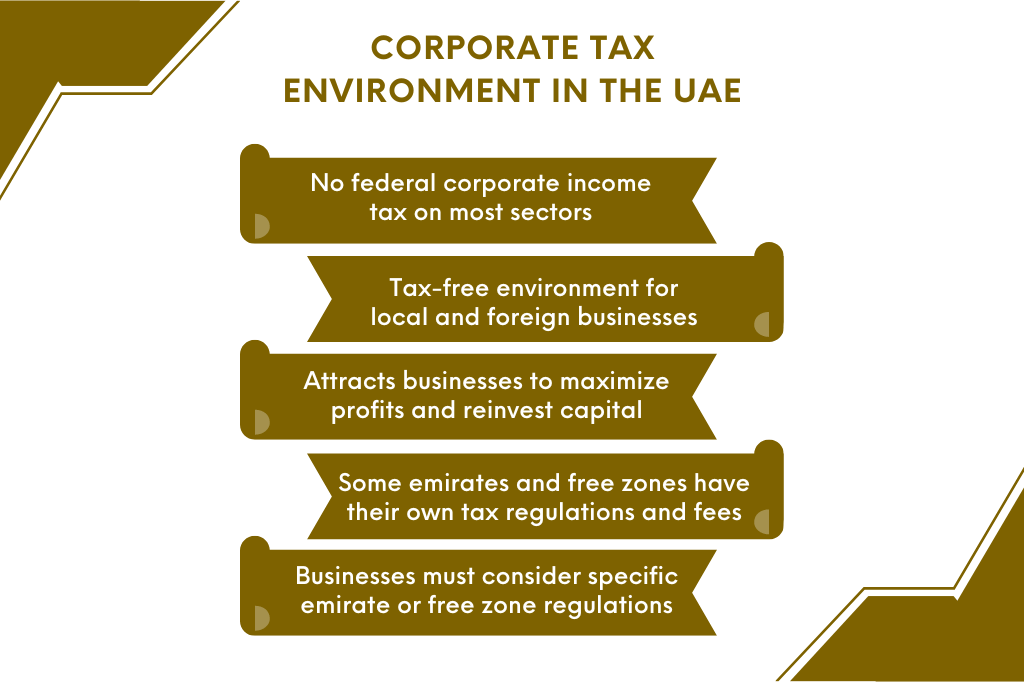
    Corporate Tax Environment in the UAE:

    • No federal corporate income tax on most sectors.
    • Tax-free environment for local and foreign businesses.
    • Attracts businesses to maximize profits and reinvest capital.
    • Some emirates and free zones have their own tax regulations and fees.
    • Businesses must consider specific emirate or free zone regulations.

    Companies in most industries in the UAE do not have to pay government corporate income tax right now. This lack of corporate tax affects all companies in the country, whether they are owned by people from the country or by people from other countries. Businesses that want to make the most money and reinvest it back into their operations are very interested in this tax-free atmosphere.

    It is very important to keep in mind, though, that even though there is no government corporate tax, some emirates and free zones may have their own rules about taxes and fees. Some free zones, for example, charge taxes on certain types of business activities or fees for things like licensing and running the company. Because of this, companies that want to set up a branch in the UAE should carefully research the rules in the state or free zone where they want to do business.

    Value Added Tax (VAT) in the UAE

    While the UAE does not have a business income tax, it has had a Value Added Tax (VAT) system in place since January 1, 2018. Most things and services sold in the country are subject to VAT, which has a standard rate of 5%. If a business in the UAE makes more taxed sales and imports than a certain amount each year, the government requires them to sign up for VAT.

    Businesses must register for VAT and follow the rules to avoid fines and make sure they follow UAE tax laws. According to the rules set by the Federal Tax Authority (FTA), businesses must keep correct records of their transactions, send invoices that are compliant with VAT, and send regular VAT returns.

    Key Benefits of the UAE’s Tax Environment

    • Absence of Corporate Income Tax:
      •  No corporate income tax for most sectors
      • Allows companies to retain more of their earnings
      • Increased reinvestment opportunities for business growth
    • Simplified Tax Structure:
      • Reduced administrative burdens
      • Lower compliance costs
      • Greater focus on core business operations
    • Tax Incentives in Free Zones:
      • Specific tax exemptions tailored to different industries
      • Zero percent corporate tax rate in many free zones
      • Full ownership rights for foreign investors
      • Unrestricted profit repatriation
    • Enhanced Competitive Edge:
      • More funds available for innovation and expansion
      • Attraction of both local and international enterprises
    • Streamlined Customs Procedures:
      • Efficient import/export processes
      • Facilitates global trade and supply chain management
    • Business-Friendly Regulations:
      • Supportive policies for startups and established companies
      • Encouragement of foreign investment and economic growth

    Tax Residency and Double Taxation Treaties

    Tax residency is an important idea for businesses that do business internationally or have a location in more than one country. People don’t have to pay personal income tax in the UAE, but companies that are formed there have to follow tax residency rules that may affect their tax obligations around the world. Businesses need to know these rules in order to properly handle their tax obligations and make sure they follow foreign tax rules.

    Also, the UAE has taken the initiative to sign Double Taxation Avoidance Agreements (DTAs) with many countries around the world. The goal of these deals is to keep people from having to pay taxes twice on income they earn in one country while living in another country. DTAs make it clear what taxes people need to pay, lower tax loads, and encourage trade and investment between the UAE and its treaty partners.

    The Role of Free Zones in the UAE’s Tax System

    Free zones are an important part of the UAE’s tax system because they give businesses special rewards and benefits. These zones are meant to bring in foreign investment by offering tax breaks, streamlined customs processes, and other rules that are good for business. Companies that work in free zones usually don’t have to pay any company taxes and can send their profits back to their home country without any problems.
    Each free zone has its own rules and benefits, making them useful for different types of businesses, like manufacturing, banking, technology, and logistics. Businesses can use these perks to improve their operations and make more money in the UAE if they pick the right free zone.

    Conclusion

    To sum up, if you want to understand how business taxes work in the UAE, you need to know about the regulatory environment, which includes federal laws, emirate-specific rules, and VAT requirements. Businesses that want to start up or grow in the UAE can get help from professionals to make sure they follow the rules and get the most out of their tax plans. DXB-VIP has a team of professionals who can help you with any part of the service you need.

    Businesses can take advantage of the UAE’s business-friendly environment and meet their tax obligations by getting professional advice and keeping up to date on changes in the tax system.

  • Understanding Corporate Tax in the UAE: A Comprehensive Guide

    Understanding Corporate Tax in the UAE: A Comprehensive Guide

    For many years, the United Arab Emirates has been a tax haven with its 0% tax rate. However, in December 2022, the UAE government introduced its first-ever corporate tax regime with a 9% corporate tax (CT) rate. This new tax regime became effective for businesses with fiscal years starting on or after June 1, 2023, and applies uniformly across all Emirates.

    If you’re an entrepreneur, investor, or business owner operating in the UAE, understanding and complying with the new corporate tax regulations is crucial to avoid any penalties. This article will guide you through the essentials of corporate tax in the UAE to ensure your business remains compliant.

    Who Needs to Pay Corporate Tax in the UAE

    According to the CT Law, all the companies in the UAE and people engaged in any sort of business activity are eligible for the corporate tax. Foreign companies are subject to UAE corporate tax if they have a significant physical presence in the UAE or derive income from their activities or assets in the UAE.

    Certain entities are exempt from paying UAE corporate tax, including:

    • UAE government entities and specific government-controlled entities
    • Businesses engaged in extracting natural resources like oil, gas, and minerals under separate tax regulations established through concession agreements or fiscal letters
    • Qualifying public benefit entities dedicated to social welfare
    • Qualifying investment funds such as Social Security funds

    If your business falls under any of these exemptions, you must register for corporate tax and then apply for exemption to the Federal Tax Authority of UAE. Failure to do so will subject your business to corporate tax on taxable income, and it will not be considered for exemption.

    UAE Corporate Tax Rate

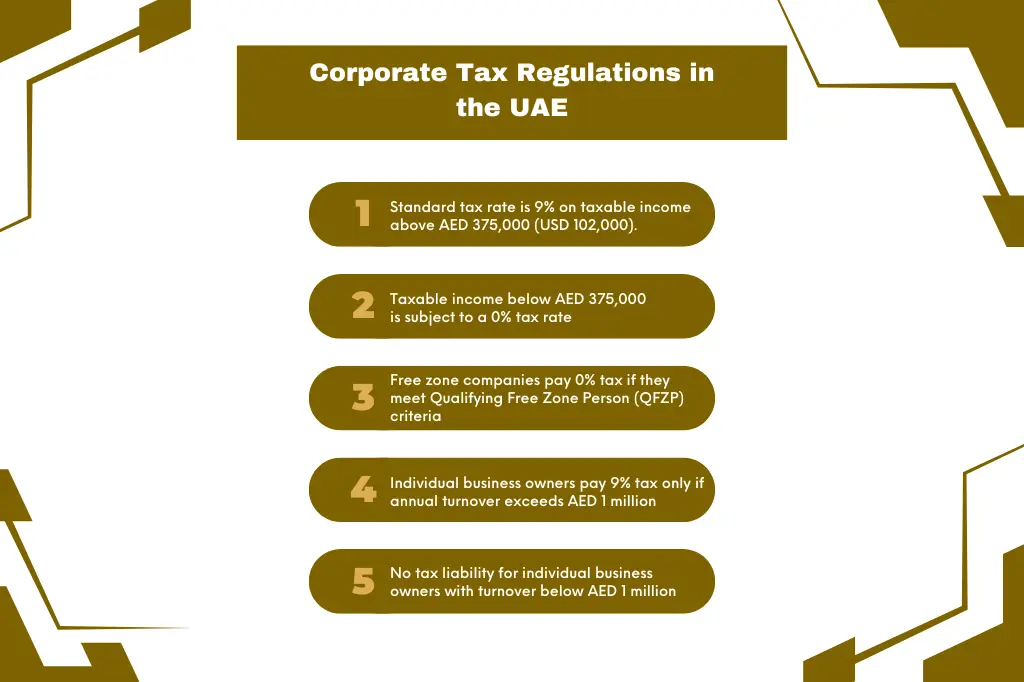
    According to the Federal Decree-Law No. 47 of 2022, the standard tax rate in UAE is 9% of taxable income above AED 375,000 (approximately USD 102,000). If your taxable income is below this threshold, your business will be subject to a 0% tax rate.

    Companies established in the UAE free zones are also subject to a 0% tax rate as long as they meet the Qualifying Free Zone Person (QFZP) criteria and have qualifying income.

    Similarly, individual business owners are subject to the 9% corporate tax on their taxable income only if their annual turnover exceeds AED 1 million. If their annual turnover is below this, they are not liable to pay taxes.


    Corporate Tax Regulations in the UAE

    • Standard tax rate is 9% on taxable income above AED 375,000 (USD 102,000).
    • Taxable income below AED 375,000 is subject to a 0% tax rate.
    • Free zone companies pay 0% tax if they meet Qualifying Free Zone Person (QFZP) criteria.
    • Individual business owners pay 9% tax only if annual turnover exceeds AED 1 million.
    • No tax liability for individual business owners with turnover below AED 1 million.

    It’s important to note that regardless of whether you need to pay taxes, have no tax liability, or are exempt, you must register for corporate tax with the UAE Federal Tax Authority (FTA) and obtain your Corporate Tax Registration number. The administrative penalty for non-registration is AED 10,000.

    UAE Corporate Tax for Free Zone Companies

    The new corporate tax framework has specific considerations for companies operating in the UAE’s free zones. A free zone company can potentially benefit from the 0% tax rate on its qualifying income, provided it meets the criteria to be classified as a Qualifying Free Zone Person (QFZP).

    What is a Qualifying Free Zone Person (QFZP)?

    A QFZP is a business entity registered within a UAE free zone that meets the following criteria set by the UAE Corporate Tax Law:

    • Has significant operations within the free zone.
    • Earns income primarily from qualifying activities carried out within the free zone or outside the free zone (Qualifying Income).
    • Chooses not to opt for the standard UAE Corporate Tax system.
    • Follows strict transfer pricing rules for transactions between related companies.
    • Maintains detailed records and financial statements.

    To qualify for the 0% tax rate, a free zone company must first register for corporate tax. Once you have the corporate tax number, you need to submit the application for Qualifying Person before your financial year ends.

    Tax Compliance and Filing Requirements for Businesses in the UAE

    Businesses subject to corporate tax in the UAE have specific responsibilities to ensure compliance with the new regulations. These include:

    Registration:
    Companies must register for corporate tax with the designated authorities, such as the Federal Tax Authority (FTA).

    Record-Keeping:
    Maintain proper accounting records that accurately reflect income and expenses, as well as supporting documentation for tax purposes.

    Tax Filing:
    Accurately file tax returns within the specified deadlines, which may include annual corporate tax returns, transfer pricing documentation, and other required filings.

    Tax Payment:
    Timely payment of any corporate tax due based on the filed tax returns.

    Failure to comply with these requirements can result in penalties of up to AED 10,000 depending on the violation.

    When to File Corporate Tax Returns in the UAE

    Under Article 48 of the Federal Decree Law 47, businesses operating in the UAE are required to submit their corporate tax returns no later than 9 months after their fiscal year ends, unless a different timeline is specified.

    Based on that, the upcoming corporate tax return deadlines for the financial year 2024 are as follows:

    – For the financial year July 2023 to June 2024, you need to file your corporate tax return by 31 March 2025.
    – If the financial year is from January 2024 to December 2024, you need to submit the return by 30 September 2025.

    Simplify Your Corporate Tax Registration and Returns in the UAE

    Navigating the complexities of corporate tax in the UAE can be challenging. Ensuring compliance with the new regulations requires meticulous planning and expert knowledge.

    To streamline your corporate tax registration and filing process, consider consulting with DXB-VIP. Contact us for a tailored consultation or leave a comment below to share your thoughts.

  • Can a Retail Business Owner Open a Bank Account in the UAE?

    Can a Retail Business Owner Open a Bank Account in the UAE?

    Retail enterprises are flourishing in the United Arab Emirates (UAE), which provides a vibrant market and lots of room to grow. Opening a bank account is a crucial step for any owner of a retail business operating in the United Arab Emirates. The steps, prerequisites, and advantages of opening a bank account for retail business owners in the United Arab Emirates are examined in this article.

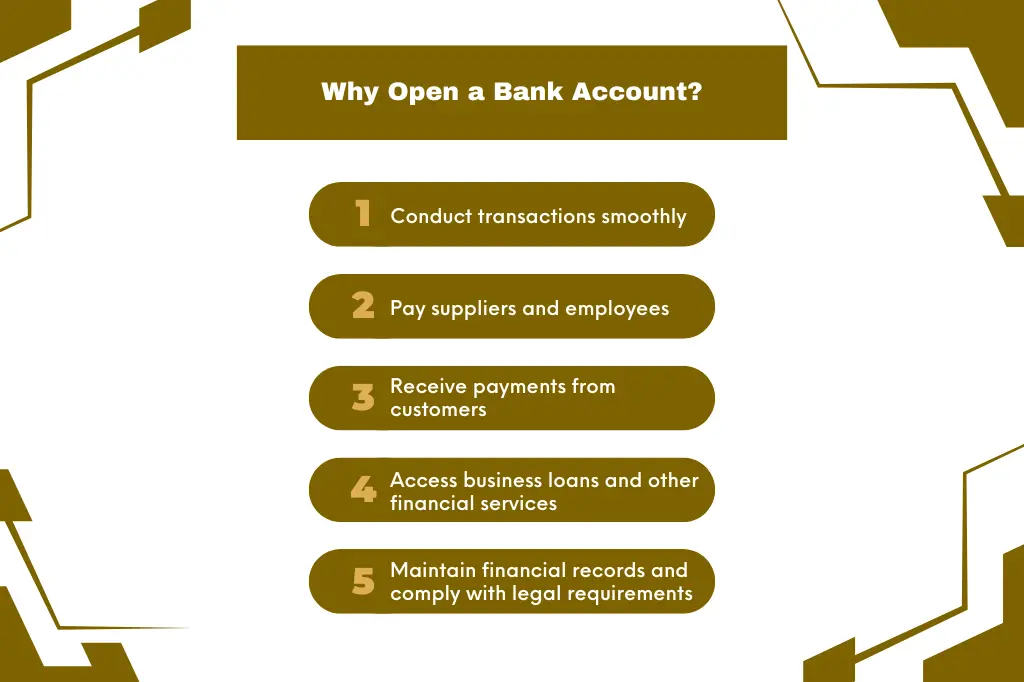
    Why Open a Bank Account?

    Having a bank account is crucial for managing your business finances effectively. It allows you to:

    • Conduct transactions smoothly
    • Pay suppliers and employees
    • Receive payments from customers
    • Access business loans and other financial services
    • Maintain financial records and comply with legal requirements


    Eligibility Requirements

    To open a bank account in the UAE, retail business owners must meet specific eligibility criteria. These requirements may vary slightly depending on the bank, but generally include:

    1. Business License

    You must have a valid business license issued by the relevant authorities. This license confirms that your business is legally registered and authorized to operate in the UAE.

    2. Proof of Business Address

    Banks require proof of your business address, which can be in the form of a lease agreement or utility bill. This ensures that your business is physically located within the UAE.

    3. Passport and Visa Copies

    You will need to provide copies of the passports and visas of all shareholders and authorized signatories. This verifies the identity and residency status of the individuals involved in the business.

    4. Memorandum of Association (MOA)

    The MOA outlines the business structure, ownership, and the scope of activities. It is a crucial document for the bank to understand the nature of your business.

    5. Bank References

    Some banks may require references from your existing bank, especially if you have an established banking relationship elsewhere. This helps the new bank assess your creditworthiness and financial history.

    Steps to Open a Bank Account

    1. Choose the Right Bank

    Select a bank that offers services tailored to the needs of retail businesses. Consider factors such as account features, fees, online banking options, and customer service.

    2. Prepare Documentation

    Gather all necessary documents, including your business license, proof of address, passport and visa copies, MOA, and any bank references. Ensure all documents are up-to-date and in order.

    3. Submit the Application

    Visit the chosen bank or submit your application online if available. Provide the required documents and complete the account opening forms. Some banks may require you to meet with a bank representative to discuss your business needs and account options.

    4. Initial Deposit

    Some banks require an initial deposit to activate your account. The amount varies depending on the bank and the type of account you choose.

    5. Account Approval

    The bank will review your application and documents. This process can take a few days to a few weeks. Once approved, you will receive your account details, and you can start using your bank account for business transactions.

    Benefits of Having a Bank Account

    Opening a bank account in the UAE offers several advantages for retail business owners:

    • Improved Financial Management: Efficiently manage your cash flow, payments, and receipts.
    • Access to Banking Services: Benefit from credit facilities, loans, and other banking services tailored for businesses.
    • Enhanced Credibility: Having a local bank account enhances your business’s credibility with suppliers and customers.
    • Compliance: Meet legal and regulatory requirements, ensuring smooth business operations.

    Conclusion

    Retail business owners can indeed open a bank account in the UAE by following a structured process and meeting specific requirements. This essential step facilitates efficient financial management and supports business growth. For expert assistance in opening a bank account and other business-related services, DXB-VIP has a team of experts that can help you with everything related to the service required.

  • Visa Renewal in Dubai – How to Renew UAE Residence Visa?

    Visa Renewal in Dubai – How to Renew UAE Residence Visa?

    Dubai has a lot of expats, so renewing visas is an important topic. Even though it may seem hard, you need to know your situation and when to act to make sure your residency doesn’t end. You can use this guide to learn how to renew your UAE residence visa, whether you are an entrepreneur, small business owner, employee of a company, or family member being sponsored.

    What is a UAE Residence Visa?

    A UAE residence visa lets people from other countries live in the UAE for a long time. It can be good for two to three years or even up to ten years, and you can update it whenever you need to. A lot of foreigners have lived in the UAE for years by updating their visas all the time. To be a permanent resident of the UAE, all you need is a legal visa and to live in the country.

    Types of Residency Visas in Dubai

    • Residency renewal for individuals in the government sector
    • Residency renewal for individuals in the private sector
    • Renewal of residency visa for investors/partners
    • Residency renewal for family members (Local/GCC sponsor)
    • Residency renewal for family members (Government sector sponsor)
    • Residency renewal for family members (Investor/Partner sponsor)
    • Residency renewal for family members over 18 years old

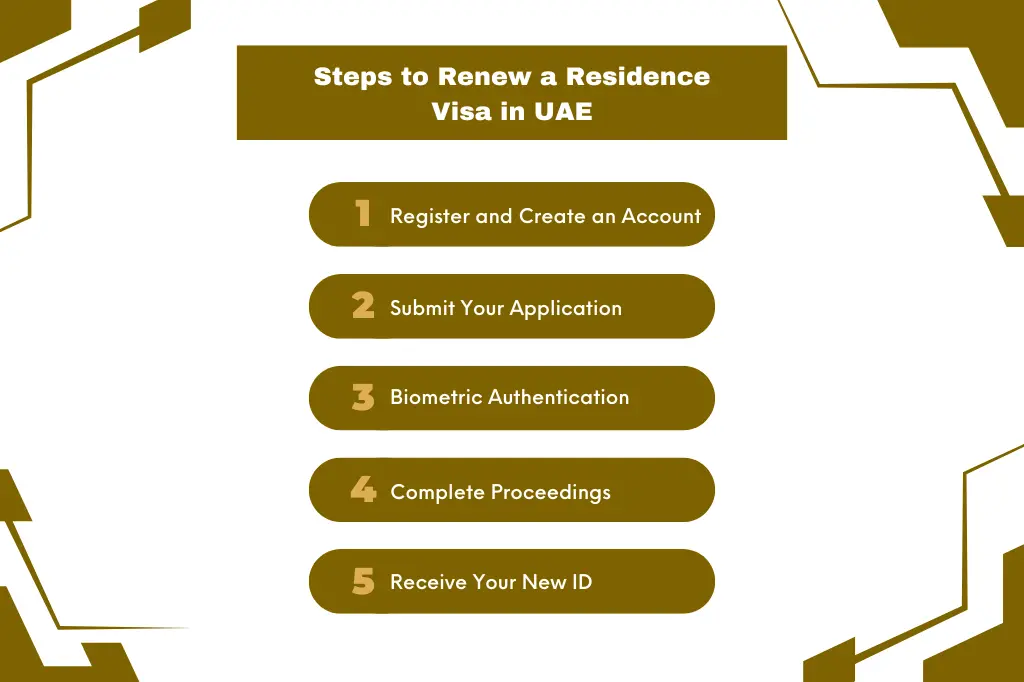
    Steps to Renew a Residence Visa in UAE

    1. Register and Create an Account: Use UAE Pass to register and log in to smart services.
    2. Submit Your Application: Ensure all data is accurate and pay the required fees, including service fees, visa costs, and other expenses.
    3. Biometric Authentication: Apply to authenticate your biometrics if necessary.
    4. Complete Proceedings: Only expatriates can complete the process by obtaining residence.
    5. Receive Your New ID: Collect your new ID with a residency permit sticker from the post office.

    Cost of UAE Residence Visa Renewal

    Several factors influence the total cost of a visa renewal in Dubai, which typically includes:

    • Contract typing and submission fees: AED 200 – AED 300
    • Labour card fee: AED 300 – AED 3600, depending on designation and company category
    • Medical typing fees: AED 300 – AED 800
    • ID typing fees (2 years): AED 280
    • Basic insurance fee: AED 800 – AED 1000
    • Residence visa stamping fee: AED 500 – AED 600

    For partners or investors, additional expenses include:

    • Emirates ID typing fees: AED 371.50
    • Medical typing fees: AED 857.50
    • Residence visa typing fees: AED 925.65

    Requirements to Renew a Residence Visa in Dubai

    • A sponsor with a valid residency permit
    • Medical fitness certificate for individuals over 18
    • Insurance card (mandatory)
    • Reissued identity card or authentic registration receipt from ICA
    • Required documents:
      • Online application or through a registered typing office
      • Original sponsored passport
      • Sponsored photo
      • Valid firm card copy (for private sector employers)
      • Valid trade license copy
      • Sponsor’s renewed labor card copy
      • Labor card renewal receipt (for individuals over 60)

    For sponsoring family members, additional documents include:

    • Copy of job contract or company contract for investors
    • Salary certificate from employer
    • Legalized marriage certificates
    • Registered tenancy contract
    • Recent utility bill

    Renewing Visit or Tourist Visa in UAE

    Tourists and visitors can renew their cards for 600 AED each time before the current one runs out. People who overstay their visas will be fined 100 AED every day starting 10 days after their visa runs out. This extension does not apply to people with special entrance permits for 96-hour tasks or certain visitors.

    Benefits of Visa Renewal in Dubai

    • Access to government healthcare and insurance
    • Allowed to open a bank account
    • Allowed to take a bank loan
    • Visa-free travel
    • Can have a driver’s license

    Here’s why you may want to get your visa renewed:

    • You can open a bank account
    • You can obtain a bank loan
    • You can have Visa-free travel to several countries
    • Your children can attend public or private schools
    • You can obtain a driver’s license
    • You can have access to government healthcare and insurance

    Conclusion

    To keep living and working in Dubai, you need to renew your UAE residence visa. Even though the steps may seem hard, making sure you meet all the dates and requirements will help you stay out of trouble.
    For an easy visa renewal process, DXB-VIP can help you with all the applications and paperwork you need. This will make sure that your renewal goes smoothly and quickly in the UAE.

    FAQ about Our Services

    Who is eligible for a UAE Residence Visa?


    Visitors who establish a new firm or invest in an existing one on Dubai’s mainland or in free zones are eligible for a residency visa.

    How many days does it take to renew your visa in Dubai?


    Visa renewal in Dubai typically takes five business days if the application is complete and correct at submission.

    What is the grace period after your UAE residence visa expires?


    The UAE government allows a 30-day grace period after visa expiration. You must apply for renewal within this period to avoid penalties.

    Visitors who establish a new firm or invest in an existing one on Dubai’s mainland or in free zones are eligible for a residency visa.

    Visa renewal in Dubai typically takes five business days if the application is complete and correct at submission.

    The UAE government allows a 30-day grace period after visa expiration. You must apply for renewal within this period to avoid penalties.

    Can I renew my residence visa before expiration?


    Yes, you can renew your residence visa up to six months before it expires, but special permission is required.

    What is the time limit of a UAE Residence visa?


    A residency visa can be valid for two to three years or even five to ten years, depending on the type. You can renew your visa as needed

    Yes, you can renew your residence visa up to six months before it expires, but special permission is required.

    A residency visa can be valid for two to three years or even five to ten years, depending on the type. You can renew your visa as needed

  • Billionaire Investor Carl Icahn’s Strategy for Business Setup in Dubai Amid Financial Challenges

    Billionaire Investor Carl Icahn’s Strategy for Business Setup in Dubai Amid Financial Challenges

    Carl Icahn’s Financial Maneuvering and Its Implications for Dubai Investors

    Financial Troubles and the Dubai Golden Visa Opportunity

    Billionaire investor Carl Icahn, well-known for his aggressive investment strategies, recently found himself in a challenging financial position. The investor has taken significant steps to manage his debts, which has caught the attention of both Wall Street and investors worldwide. His financial tactics come at a time when many are exploring new opportunities for a business setup in Dubai, particularly under the advantageous Dubai Golden Visa program.

    The Role of Dubai Business License in Diversification

    Icahn’s recent financial troubles highlight the importance of diversification in investment portfolios. For investors looking to stabilize their financial futures, exploring opportunities for obtaining a Dubai business license has become increasingly appealing. Dubai offers a favorable business environment with its strategic location, robust infrastructure, and supportive government policies. These factors are drawing more investors to consider business setup in Dubai, especially those seeking to diversify their assets and income streams.

    Icahn’s Financial Strategy and Its Lessons for Dubai Business Setup Consultants

    Icahn has managed to secure loans against his massive stock holdings, a move that could be seen as risky but necessary. For those interested in setting up a business in Dubai, this situation underscores the importance of having expert guidance. Business setup consultants in Dubai can provide crucial advice on how to navigate the complexities of establishing a business in the UAE, helping investors avoid pitfalls similar to those faced by Icahn.

    How Dubai’s Business Environment Attracts Global Investors

    Dubai’s government continues to implement policies that attract global investors, including those from the U.S. like Carl Icahn. The city’s tax-free environment, ease of obtaining a Dubai business license, and the strategic benefits of the Dubai Golden Visa make it an ideal location for new businesses. Investors are increasingly recognizing that a business setup in Dubai can offer stability and growth potential, even during turbulent economic times.

    The Importance of Strategic Planning in Dubai’s Business Landscape

    Icahn’s financial situation serves as a reminder that strategic planning is critical. Whether it’s leveraging assets or navigating complex financial landscapes, investors must approach their ventures with a well-thought-out plan. In Dubai, this means working with experienced business setup consultants who can guide investors through the process of obtaining a Dubai business license and securing their place in the city’s booming economy.

    Conclusion

    Carl Icahn’s recent financial challenges offer valuable lessons for investors worldwide, particularly those considering a business setup in Dubai. The city’s attractive business environment, coupled with the strategic benefits of the Dubai Golden Visa, makes it a promising destination for global investors. By partnering with knowledgeable business setup consultants in Dubai, investors can navigate the complexities of the market and capitalize on the opportunities available in this dynamic city.

  • Dubai Authorities Prohibit Property Owners from Leasing Due to Overcrowding and Safety Hazards

    Dubai Authorities Prohibit Property Owners from Leasing Due to Overcrowding and Safety Hazards

    Strict Measures Enforced to Ensure Safety in Residential Buildings

    In a recent crackdown, Dubai authorities have barred ten property owners from leasing their properties due to severe overcrowding and safety violations. These actions were taken after a series of inspections revealed that the properties were housing more tenants than permitted by law, creating unsafe living conditions.

    Overcrowding and Non-Compliance with Safety Standards

    The Dubai Municipality conducted thorough inspections across various residential areas, uncovering that several landlords were violating tenancy regulations. These property owners were found to be renting out units to an excessive number of occupants, far beyond the legal limits. Such overcrowding not only poses significant safety risks but also puts immense pressure on the building’s infrastructure, including water, electricity, and sanitation systems.

    Legal Implications and Penalties for Violators

    As a result of these violations, the Dubai Municipality has taken decisive action by banning the implicated property owners from leasing their units. The authorities have emphasized that any landlord found breaching the city’s safety and occupancy regulations will face stringent penalties, including heavy fines and legal action.

    Importance of Compliance with Dubai’s Property Laws

    This move underscores the importance of adhering to Dubai’s property laws and regulations. The city has a zero-tolerance policy toward any practices that jeopardize the safety and well-being of its residents. Property owners are urged to comply with the legal occupancy limits and ensure that their properties meet all safety standards to avoid facing similar consequences.

    Dubai’s Commitment to Resident Safety and Quality of Life

    Dubai’s government remains committed to maintaining high standards of living for its residents. By enforcing these regulations, authorities aim to prevent the deterioration of living conditions in residential areas and ensure that all inhabitants enjoy a safe and secure environment.

    What This Means for Dubai’s Real Estate Market

    For potential investors and tenants, this development serves as a reminder to be vigilant when choosing properties in Dubai. Ensuring that a property complies with the city’s regulations is essential for both safety and legal reasons. This crackdown may also influence market dynamics, potentially leading to increased demand for compliant properties that offer safer living conditions.

    Conclusion

    Dubai’s recent actions against overcrowded properties highlight the city’s dedication to upholding safety standards and protecting its residents. As the real estate market continues to grow, maintaining compliance with local laws will be crucial for property owners and investors alike.

  • The Dubai real-estate market, a bubble or an opportunity? And why there will be no chicken Coop in Dubai

    The Dubai real-estate market, a bubble or an opportunity? And why there will be no chicken Coop in Dubai

    In recent years, an interesting debate has emerged in Dubai’s real estate market: is it an economic bubble or a stable market based on strong economic fundamentals? This is a question everyone should ask themselves and form an opinion on before investing in real estate in Dubai.


    In many discussions, whether among ourselves or with clients, brokers, and other market players, this topic keeps coming up. It reminded me of the days when I was a young intern at an accounting firm in the region. Almost 20 years ago, there was a trend to invest in land in Romania. Not apartments, not villas, but land. Many investors, including those from the middle class, sought lucrative investments and bought land in Romania, hoping for high returns.


    Although many investors made a profit, the gains were mainly from selling to other investors, reaping a handsome profit. Like a game of musical chairs, eventually, the music stopped, and we discovered that these were agricultural lands where no buildings could be constructed. No buildings would grow there, and no official had plans to change the land’s designation. Many were left stuck with agricultural land in Romania, essentially with chicken coops and potatoes.


    Does this mean that the fate of real estate investors in Dubai will be similar to that of land investors in Romania? Absolutely not. Those who invested in Romania did so based on speculation and belief in their ability to “flip” the land or change its designation. In Dubai, real estate prices are rising due to the influx of people coming to live and work in the city, enjoying the high quality of life and low tax regime, and the emirate leaders’ plans to double the city’s population in the next 15 years.


    While I do not intend to discuss whether the price increases are justified, there is no doubt that the basis for purchasing real estate in Dubai is more solid than land in Romania. In Dubai, those who believe real estate prices will continue to rise have strong arguments that are not based on shaky grounds.


    At Emirati, we will not recommend agricultural land or chicken coops, but we are happy to assist you with anything related to real estate investments in Dubai. Good luck!

  • How to Start a Food and Drink Business in Dubai, United Arab Emirates (2024)

    How to Start a Food and Drink Business in Dubai, United Arab Emirates (2024)

    There are a lot of job opportunities in the food and drink business in Dubai, which is a big part of the UAE’s amazing economic growth. Now is the best time to start your business, whether it’s a grocery store, a food truck, a café, a food catering service, or a food packing business. This is why.

    The UAE has one of the Middle East’s fastest-growing economies. Over the past few years, the food business has grown a lot. In 2023, it’s expected to bring in $37.8 billion. But there are certain things you need to do to start a business here. You can learn everything you need to know to start a food and drink business in Dubai from this book.

    Key Factors Driving the Growth in Dubai’s Food and Beverage Industry

    • Wide Range of People: People from more than 200 countries live in Dubai, which makes the market lively and full of people looking for different kinds of food and meal experiences.
    • Options for high-end dining: More and more people want to have high-end dining experiences, which is causing the need for these places.
    • Easy to Get a License: In Dubai, getting a license is quick and easy, which makes it easier for people to start their own businesses.
    • Tourism Hub: Every year, more than 14 million people visit Dubai, which makes it a great place for startups to grow.
    • Outstanding Infrastructure: Dubai has state-of-the-art infrastructure that goes above and beyond what is expected around the world.
    • Famous Restaurants: Dubai has the first Michelin-starred restaurant in the Middle East, which shows how good the food is there.

    What You Need to Do to Start a Food and Drink Business in Dubai

    1. Think about the costs—feasibility of the market:
    A lot of money is needed to open a restaurant. Here’s a rough idea of how much it will cost:

    • Fee for a license: AED 5,500 to 13,00
    • Space for rent or lease: AED 90 to 160 per square foot
    • AED 80K to AED 10K for buying tools and buildings
    • AED 12K to 15K for quality assurance and compliance
    • Spending on other things: AED 50K

    The exact amounts depend on where the business is located, how big it is, and other things.

    2. Choose the Business Model:
    Learn about the business and what people in your area want. Some popular models are:

    • There are restaurants, cafés, and food trucks that serve both relaxed and fancy food.
    • The Foodstuff Business acts as a supply chain for food items in bulk.
    • Food catering is the service of bringing food to events and meetings.
    • Food packaging: coming up with designs and providing package materials.
    • Bakeries are businesses that make baked goods.
    • Cloud Kitchens runs virtual kitchens that send food online.
    • Producing food on a large scale means making packed foods.

    Also Read: Launching Your Food Truck Business in Dubai – A Guide to Success

    3. Get a No-Objection Certificate (NOC).
    This is needed for some food businesses, like food trucks or booths that aren’t selling food at an event.

    4. Get the licenses you need.
    You’ll need a food license and a trade license. It ranges in price from AED 5,510 to AED 11,500, based on the type of restaurant. The Food Safety Department gives out the Food License.

    5. Choose a Location:
    Pick a location based on how visible it is, the type of customers you want to attract, how much it costs, and how close it is to vendors.

    6. Make a menu:
    Carefully plan your menu to cover your costs and bring in people. Make changes as needed based on what the customer wants.

    7. Plan the layout of the restaurant.
    Make sure your plan meets certain requirements, like having a good ventilation system and a well-thought-out store area.

    8. Spend money on technology:
    For billing, order handling, and keeping track of inventory, use a strong point-of-sale (POS) system.

    9. Hire the Right People:
    Use clear job descriptions and in-depth interviews to find suitable people to work for you.

    10. Comply with the Law:
    To keep things running smoothly, make sure you follow rules about food safety, halal requirements, and importing and exporting.

    If you do it right, starting a food and drink business in Dubai can be very profitable. Dubai has a lot of possibilities, but it’s important to follow the law.

    DXB-VIP can help you get the necessary forms and approvals for your food and beverage business in the UAE so that you can start running your business without any problems.

  • How to Get a Golden Visa in Dubai:  Who is Eligible, What Are the Benefits, and How to Apply?

    How to Get a Golden Visa in Dubai: Who is Eligible, What Are the Benefits, and How to Apply?

    The UAE Golden Visa is now a very popular way to live in the country. It has long-term benefits for investors, business owners, researchers, medical professionals, and other bright people. There are many benefits to this visa that make it a good choice for people who want to stay in Dubai for a long time. This detailed guide will tell you everything you need to know about getting a Golden Visa in Dubai, such as the perks, requirements, and how to apply.

    How to Understand the Golden Visa

    The UAE government created the UAE Golden Visa as a long-term residency visa to bring in and keep talented people, investors, and top workers from around the world. The Golden Visa is different from other visas because it lets you live in the country for up to 5 or 10 years, and you can repeat it. People with this visa can live, work, and go to school in the UAE without a national support.

    What the Golden Visa Can Do for You

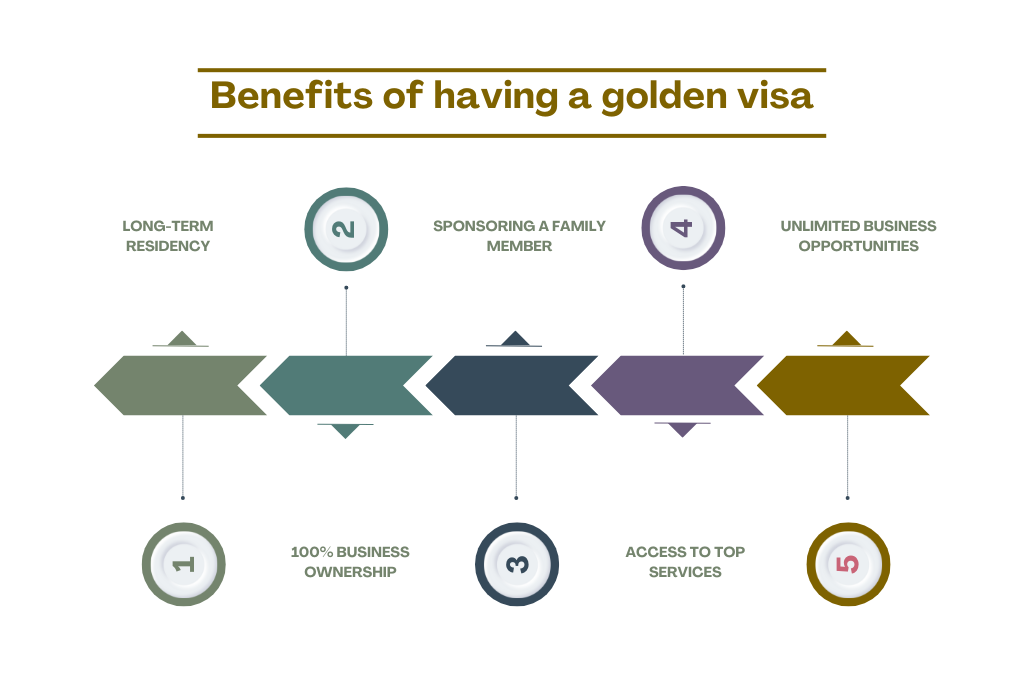
    Benefits of having a golden visa:

    • Long-Term Residency
    • 100% Business Ownership
    • Sponsoring a family member
    • Access to Top Services
    • Unlimited Business Opportunities

    1. Long-Term Residency: The Golden Visa gives you and your family long-term residency, which gives you and your family stability and protection. With a 5 to 10 year visa, you can plan your future in Dubai without having to update it all the time.

    2. 100% Business Ownership: People with a Golden Visa can own all of their business in the UAE. This means that they can make all the decisions about their business and their earnings without having to find a local sponsor.

    3. Sponsoring a family member: The Golden Visa lets you support your spouse, children, or even your parents, so everyone in your family can get the same long-term residency benefits.

    4. Access to Top Services: If you have a Golden Visa, you and your family will be able to use the UAE’s best services, such as its hospitals, schools, and banks, which will make your life better.

    5. Business Opportunities: Because of its prime location and fast-growing economy, Dubai offers Golden Visa holders unbeatable business opportunities and the chance to meet other investors and businesspeople.

    Who Can Get a UAE Golden Visa?

    The Golden Visa is open to a number of different types of people, each with their own set of requirements. These are the main groups:

    1. Investors: People who put money into bonds, stocks, or real estate can apply for a Golden Visa. They have to spend a certain amount of money and show proof that they have done so.

    2. Business owners: The Golden Visa is for business owners in the UAE who have new ideas for projects or big businesses they want to start. They have to show how important their business is and how it might affect the income of the UAE.

    3. Highly Skilled: The Golden Visa is for researchers, scientists, doctors, engineers, and other highly skilled professionals who have done amazing things in their areas. They have to show proof of what they’ve done and how knowledgeable they are.

    4. Students Who Have Done Amazing Things: Students who have done amazing things in school may also be able to get the Golden Visa. They have to meet certain school requirements and show that they have what it takes to be successful in the future.

    Tips on How to Get a Golden Visa

    1. Find Out If You Meet the Requirements: The first thing you need to do is check to see if you meet the requirements for the Golden Visa. Check the standards for your category to make sure you meet them.

    2. Get the Documents You Need: Get the documents you need for your application ready. A valid passport, proof of investment or business ownership, bank statements, proof of health insurance, and passport-sized photos are some of the most common papers that are needed.

    3. Send in your application: Send in your application through the right routes for the UAE government. This process might be different for each group and each emirate where you are applying. To avoid delays, make sure that all the information you give is correct and full.

    4. Medical Exam: To meet the rules set by the UAE government for your health, get a medical exam at a licensed medical center. You have to do this as part of the entry process.

    5. Review and approval of the application: Once you send in your application, it will be looked over by the right people. If you are accepted, you will be given the Golden Visa, which lets you live in the UAE for a long time.

    In Conclusion

    Getting a Golden Visa in Dubai has many benefits, such as the ability to live there permanently, own a business, have family members sponsor you, use premium services, and find many business possibilities. The Golden Visa can help you have a safe and successful future in the UAE whether you are an investor, business owner, specialized worker, or top student.

    DXB-VIP offers expert advice and help to people who need it with the application process for a Golden Visa. DXB-VIP makes sure that everything goes smoothly and quickly by knowing everything there is to know about the application process and standards. You can focus on your goals while they take care of the paperwork. DXB-VIP’s professional services make it easy to get your Golden Visa and open up the huge opportunities of living and working in Dubai.